Catégorie : Les 4 notions

Les 4 notions à étudier pour l’épreuve d’anglais du BAC

  • The Ebola outbreak

    ebola

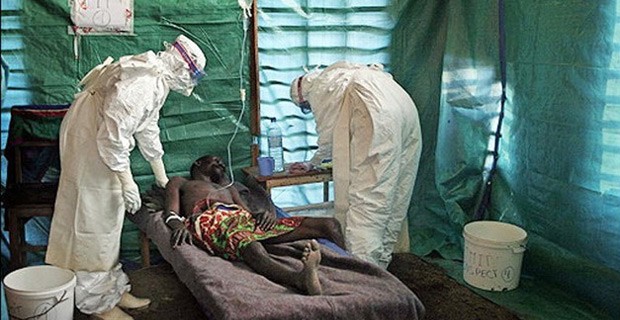
    The Ebola outbreak is currently in the news and even more so now that several cases have been detected in the USA.

    What exactly is Ebola? Is there a cure to this deadly disease? How can countries work together to reduce the risk of the disease spreading?

    Ebola – or Ebola haemorrhagic fever (EHF) – is a really deadly virus: 50% to 90% of people who catch it die from it. But there are a few forms of the virus which have been identified by scientists and given the right medical care and treatment, you can recover. Ebola was first spotted in the African countries of Sudan and the Democratic Republic of the Congo in 1976. In the space of five months in that year, 284 people in Sudan caught the virus. It killed 117 of them.

    You can catch it through direct contact with the body fluids of an infected person such as blood and saliva. It is not airborne like the flu so is more difficult to catch but is very infectious: so infected people have to be kept separate to reduce the risk of it spreading. Healthcare workers who have looked after sick patients have also been infected.

    For the moment there is no known cure however a new experimental drug, ZMapp, has been used in the US on health workers and a UK nurse who caught the disease in Africa. They recovered from the virus.

    The World Health Organization warns greater global efforts are needed to combat the Ebola virus, which is spreading ever faster in West Africa despite efforts to contain it. Barack Obama and EU leaders took part in a videoconference on Wednesday 15th October to discuss the growing Ebola crisis following warnings that the outbreak could grow to 10,000 new cases a week within two months. They discussed what further action can be taken to help stop the spread of the virus in west Africa and how passengers arriving from Africa can be screened to prevent the disease spreading further.

    Here are a few videos that explain more about this outbreak.

    What is Ebola? – in 60 seconds 

    An interactive video : Ebola – the virus posing a deadly threat to millions

    Documents, videos and articles on the BBC website

    Progress towards a vaccine : video

    Vocabulary exercises about vaccines

    Ideas for a debate about compulsory vaccinations
  • Social media – is it really progress?

    Two interesting videos about the negative sides of social media

    The selfie : http://film-english.com/2014/10/06/selfie/

    Look up –  a film about the isolation caused by the use of new technology http://film-english.com/2014/09/29/look-up/

  • Scottish Independence referendum

    1961547_662154397165294_980255488_n-438x620

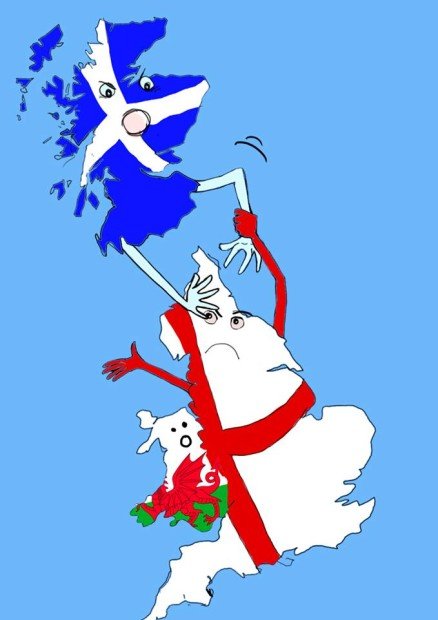
    The Scottish independence referendum takes place on September 18th 2014. The voters will be asked one question: « Should Scotland be an independant country? »

    The result of the referendum should be known on the 19th September. Today a poll (sondage) shows the « yes » side in the lead for the first time. Many people still haven’t made up their mind.

    Here are a few articles to help you understand more about the Scottish independence referendum:

    – a very clear BBC article which explains why the referendum is taking place, what are the arguments « for and against » and the key issues at stake

    – a website for resources and views on the referendum

    – a pdf to download with the background information

    – a video with different opinions for and against :

    http://www.youtube.com/watch?v=YPgUvIJmDCc

    – 9 reasons why Scotland is better off independant :

    http://www.youtube.com/playlist?list=PL2-LQh4BnSEdirnTAd-VqD5kzF8keQoNV

    – the arguments against Scottish independence :

    – Oral comprehension (type BAC)

    http://www.youtube.com/watch?v=1ectcRXYtBY

    – What is at stake? (BBC videos)

    Do you think that Scotland should become independant?

  • What is progress?

    Here are a few videos about progress:

    What is progress?

    http://www.youtube.com/watch?v=-IRzfLDmnsA

    Progress is movement in the right direction:

    http://www.youtube.com/watch?v=NPdoHMUIm_k

    Progress is education for all:

    Progress is hope:


    On the other hand, what are the negative effects of technology:

    http://www.youtube.com/watch?v=jAs7vbgBOas

    http://www.youtube.com/watch?v=790hLh9KCb8


    What impact has « progress » had on the planet?

    What is the human footprint?

    http://www.youtube.com/watch?v=ZQdejn_RxBQ

  • What makes someone a hero? (mis à jour le 23.09.14)

    téléchargement

    Do you need ideas for the notion of myths and heroes?

    What makes someone a hero? Is a hero someone who does a heroic act or is it simply someone doing his or her job?

    Take a look at this website for some inspiration.

    Here you will find a list of suggested heroes from Martin Luther King to Usain Bolt.

    There is also a page which talks about what is a hero and another page where you will find descriptions of some the heroes mentioned with their life stories, their achievements, their characteristics and some quotations.

    What is a hero? Different students give their opinion:

    http://www.youtube.com/watch?v=zegboN3w1D

    An inspirational video « There’s a hero in you » – This video features the following heroes:
    John F. Kennedy
    Martin Luther King, Jr.
    John Lennon
    Princess Diana (Lady Diana, Princess of Wales)
    Mahatma Gandhi
    Malala Yousafzai
    Nick Vujicic
    Jacques-Yves Cousteau
    Jane Goodall
    Francine Wheeler

    Quotes about heroes:

  • Google Glass – is progress always positive?

    Google Glass

    When we define the « idea of progress » we usually say that progress is positive: medical progress, social progress, technological progress …all have contributed to our modern-day world being a better place. But how does this technological progress change our lives, is it really a positive change or are we becoming too dependent on new technologies?

    One of the latest inventions is Google Glass, a pair of glasses which do much more than the average smartphone or computer. Is this kind of technological progress positive or will it lead to people becoming more isolated and more stressed?

    Here are a few links to help you think about it:

    An article about the pros and cons of Google Glass

    A BBC News report about the advantages and disadvantages of the Google Glass

    The ad showing what the Google glass can do :

    http://www.youtube.com/watch?v=JSnB06um5r4

    A video showing a typical day with Google Glass :

  • Oscar Pistorius – the rise and fall of a sports hero

    Oscar Pistorius was born in Johannesburg, South Africa, in 1986. At the age of 17 he won a gold medal at the Paralympic Games in Athens. Famous for his artificial legs which earned him the nickname « Bladerunner » he went on to become an international sporting superstar. In the 2012 London Olympic Games he made history by becoming the first double amputee to run in Olympic Games. However the following year in February 2013, Pistorius was accused of murdering his girlfriend, Reeva Steenkamp. The trial started in Pretoria on Monday 3 March.

    His story is the perfect example of a modern-day hero’s fall from grace.


    Below you will find some links about the rise and fall of Pistorius:

    – The story of Oscar Pistorius : http://www.bbc.com/sport/0/disability-sport/21455930

    – Article « Pistorius, the fall of a Hero » : http://www.politisite.com/2014/03/04/oscar-pistorius-fall-of-a-hero/

    – Article « The myth of sporting heroes » : http://www.dailymaverick.co.za/opinionista/2014-03-11-531f912e65221/#.U0KbKPl_tGk

    – Video: The Blade runner:

    – Video: Oscar’s rise and fall from stardom:

  • The history of the world in two minutes

    A short video that perfectly illustrates the idea of progress !

    (no language just pictures)

    http://www.youtube.com/watch?v=MrqqD_Tsy4Q&feature=youtube_gdata_player

  • St Patrick’s Day

    irish-deal_1580989c

    St Patrick’s Day is celebrated on the 17th March – but what are the myths surrounding this religious festival?

    ST. PATRICK

    Saint Patrick, who lived during the fifth century, is the patron saint and national apostle of Ireland. Born in Roman Britain, he was kidnapped and brought to Ireland as a slave at the age of 16. He later escaped, but returned to Ireland and was credited with bringing Christianity to its people. In the centuries following Patrick’s death (believed to have been on March 17, 461), the mythology surrounding his life became ever more ingrained in the Irish culture: Perhaps the most well known legend is that he explained the Holy Trinity (Father, Son and Holy Spirit) using the three leaves of a native Irish clover, the shamrock.

    THE FIRST ST PATRICK’S DAY PARADE

    Since around the ninth or 10th century, people in Ireland have been observing the Roman Catholic feast day of St. Patrick on March 17. Interestingly, however, the first parade held to honor St. Patrick’s Day took place not in Ireland but in the United States. On March 17, 1762, Irish soldiers serving in the English military marched through New York City. Along with their music, the parade helped the soldiers reconnect with their Irish roots, as well as with fellow Irishmen serving in the English army.

    THE CHICAGO RIVER ON ST. PATRICK’S DAY

    images

    As Irish immigrants spread out over the United States, other cities developed their own traditions. One of these is Chicago’s annual dyeing of the Chicago River green. The practice started in 1962, when city pollution-control workers used dyes to trace illegal sewage discharges and realized that the green dye might provide a unique way to celebrate the holiday. That year, they released 100 pounds of green vegetable dye into the river–enough to keep it green for a week! Today, in order to minimize environmental damage, only 40 pounds of dye are used, and the river turns green for only several hours.

    ST. PATRICK’S DAY AROUND THE WORLD

    Today, people of all backgrounds celebrate St. Patrick’s Day, especially throughout the United States, Canada and Australia. Although North America is home to the largest productions, St. Patrick’s Day is celebrated in many other locations far from Ireland, including Japan, Singapore and Russia.

    In modern-day Ireland, St. Patrick’s Day was traditionally been a religious occasion. In fact, up until the 1970s, Irish laws mandated that pubs be closed on March 17. Beginning in 1995, however, the Irish government began a national campaign to use interest in St. Patrick’s Day to drive tourism and showcase Ireland and Irish culture to the rest of the world. Today, approximately 1 million people annually take part in Ireland ‘s St. Patrick’s Festival in Dublin, a multi-day celebration featuring parades, concerts, outdoor theater productions and fireworks shows.

    (Source: www.history.com)

    You can watch these videos to find out more information:

    http://www.history.com/topics/st-patricks-day/history-of-st-patricks-day/videos/history-of-st-patricks-day?m=528e38969e64d

    http://www.history.com/topics/st-patricks-day/history-of-st-patricks-day/videos/bet-you-didnt-know-st-patricks-day

    Use this link to find out about how St Patrick’s Day is celebrated:

    http://www.history.com/topics/st-patricks-day/history-of-st-patricks-day/interactives/st-patricks-day-by-the-numbers

  • Places and forms of power: Queen Elizabeth II

    Royal visit to Hertfordshire

    Her Majesty the Queen

    Elizabeth II

    Queen Elizabeth II was  born on 21 April 1926. Today she is Queen of sixteen countries throughout the world: the United Kingdom, Canada, Australia, New Zealand, Jamaica, Barbados, the Bahamas, Grenada, Papua New Guinea, the Solomon Islands, Tuvalu, Saint Lucia, Saint Vincent and the Grenadines, Antigua and Barbuda, Belize, and Saint Kitts and Nevis. She is the queen of each country separately, and all sixteen are independent countries. She became Queen when her father, King George VI, died on 6 February 1952.

    The countries of which she is Queen are known as Commonwealth realms. Their total population is over 129 million. Elizabeth II lives in the United Kingdom. In all the other countries where she is queen, a person has been chosen to represent her. This person is known as the Governor General.

    Elizabeth II is Queen and is interested in the running of her countries, but she does not tell the governments what to do. She has regular meetings with people from her governments, but it is they who run the countries. She performs ceremonies for the governments, gives out honours, and visits and supports many charities.

    Since 1947, the Queen has been married to Prince Philip, Duke of Edinburgh. Prince Philip was born into the royal families of Greece and Denmark. Just before they were married, he became a citizen of the United Kingdom, and changed his name to Philip Mountbatten. He became the Duke of Edinburgh on the day he married, and became a Prince of the United Kingdom in 1957. The Queen and Prince Philip have four children, eight grandchildren and three great-grandchildren.

    Source: Simple English Wikipedia

    Here are a few links to learn more about Queen Elizabeth:

    An exclusive interview with the Queen: video

    10 things you didn’t know about the Queen: video