Definition of spaces and exchanges

An exchange is the act of  giving or receiving something in substitution for something else. In today’s modern-day world these exchanges can take several forms:  economic – work exchanges, exchange of goods, trading across borders,  cultural – exchange of ideas, information, education,  movement of people – immigration, student exchanges, gap years…  Our modern-day world is changing quickly and seems to be a smaller place due to improvements in technology and communication. Information exchange has become easier thanks to the internet and international trade has enabled us to expand our markets for goods and services that might not have been available to us.  These different cultural, economic, sociological and language interactions have transformed and characterised our modern-day world – sometimes for better, sometimes for worse.  We can illustrate this notion with the following examples :

Exchange or movement of money:

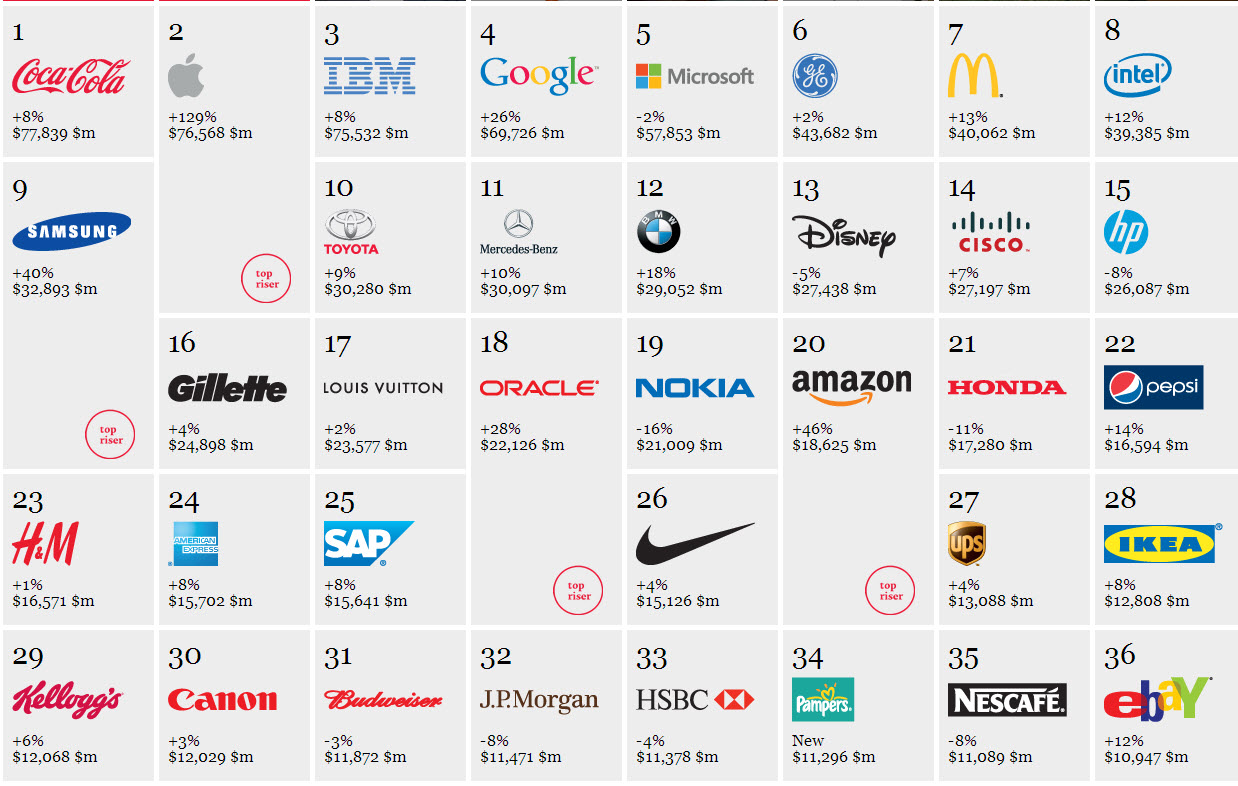
– international trade is now much easier thanks to modern communication systems and faster transport. Foreign products are easily available in our supermarkets and on internet. Certain brands are known all over the world. We live in a huge global economy – this is otherwise known as globalisation.     – Watch the video to find out more . What are the advantages and disadvantages of  globalisation? – Watch this ad on youtube: 

http://youtu.be/t6gwfMBkWQU  – What do you see? What are the disadvantages of globalisation? – Link to the BBC website : what is globalisation?  and a BBC video about globalisation – Don’t forget to mention the downsides of globalisation: for example child labour, exploitation of people and resources interbrand
Exchange of information and communication

– One of the major developments in the most recent years is the internet and the different social networks: Facebook, Twitter, Skype…they are changing the way we live and communicate today. These networks make it easier for us to stay in touch with friends and family abroad, they open up borders and enable us to communicate with people abroad. However there are also disadvantages to this fast development of internet: there is a lot of false information available, people can become addicted and spend less time with friends and family, there are other dangers such as bullying , pornography, identity theft….. – School and education  – there is more and more social diversity and more knowledge than in the past. Thanks to internet information travels faster than before (but this can sometimes be negative especially when the information is false). We can compare the different educational systems across the world.

Movement of people

– Immigration: how and why it began? Why did people emigrate to the USA, what is the American Dream ….. The impact of  Mexican-US migration: http://www.youtube.com/watch?v=T5sF1I_lBbQ http://www.youtube.com/watch?v=5KvG8BwhSUs – Cultural interactions: the movement of people across borders  – Gap year, student exchange programs…. What is a gap year? http://www.youtube.com/watch?v=ajTtOKuEnZg – What impact has the movement of people had on the different countries? Who benefits from these exchanges? What are the new emerging powers?   For more information here is another « prezi » to help you find some ideas to illustrate the notion of spaces and exchanges http://prezi.com/l-0odniubs6n/spaces-exchanges/

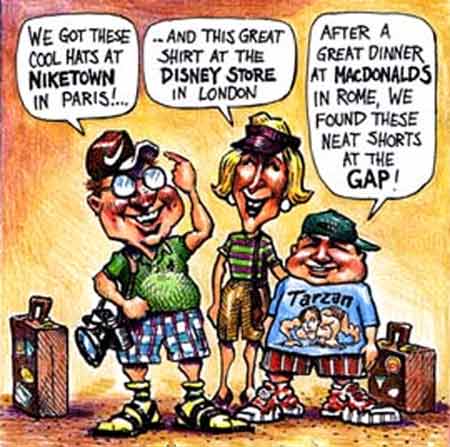
World_Vission_Cartoon     globalisation

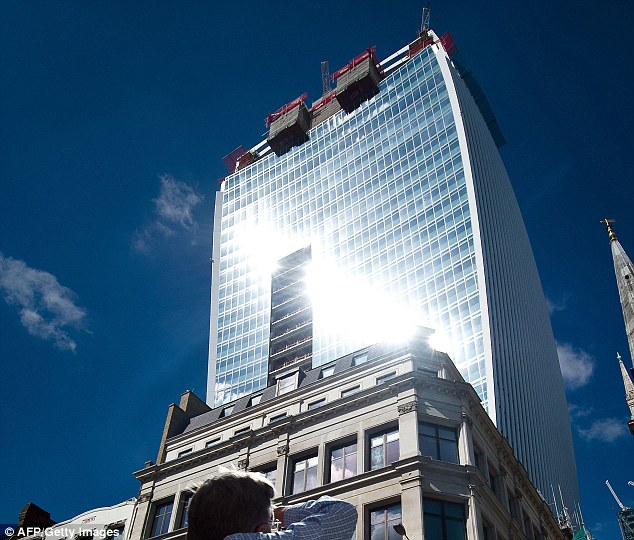
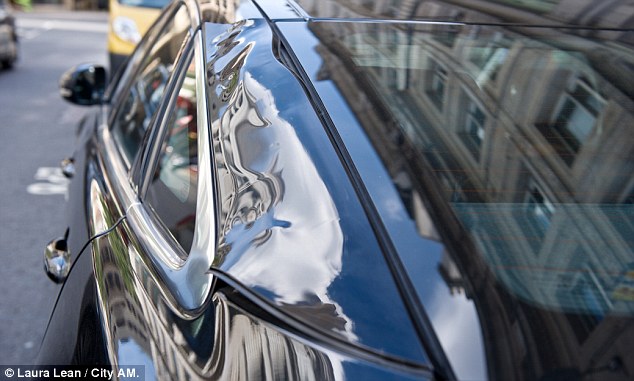
A skyscraper melts a car!

article-2409073-1B898673000005DC-114_634x540        car damage

A new London skyscraper, known as the « Walkie Talkie » has been blamed for reflecting light which melted parts of a car parked on a nearby street.

The skyscraper has a concave design and so the sunlight is reflected in a a very localised point in the early afternoon. This man had parked his car here for only 1 hour and came back to find parts of it had melted! Members of the public wanting to prove how dangerous the beams can be even managed to fry eggs in the heat!

You can read more about this story on the BBC news website

You can watch a news report about it on DailyMotion

The idea of progress (1)

March-of-Progress

5109XMPO1

The Idea of Progress


The Idea of Progress is the theory that the different advances in technology, science, and social organization can produce an improvement in the human condition. That is, people can become happier in terms of quality of life (social progress) through economic development (modernization), and the application of science and technology (scientific progress). 

Progress implies change and evolution  and throughout history most of the advances have been positive. However the rhythm of progress seems to have accelerated over the last few decades and  the technological breakthroughs and scientific developments are causing  some people to question this progress. What effect do these « advances » have on our society? Do they always have a positive effect on the way we live?

Do certain new technologies bring people closer together or do they alienate us?  What effect does this progress have on our culture?

Here are just a few topics to help you illustrate this notion

1. Scientific Progress

– Medical advances:  cures for illnesses such as AIDS and certain cancers

– Cloning

– Performance enhancing drugs

– Genetically modified organisms

– Designer babies

– Space travel

2. Technological Progress:

– Cheap and rapid transportation across the world enabling transport of products all over the world

– Advances in global communications networks facilitating the exchange of information

– Robots, automated production

– The internet – advantages and disadvantages (have we become to dependent on technology, is it isolating us from one another?)

3. Social Progress:

–  Women’s rights :  obtaining the vote for women, the fight for equality, equal pay

– Increased recognition of minority groups: ethnic, racial or religious minorities


What are the ethical, social and environmental consequences of these developments? What effect do they have on our modern-day world?


Myths and heroes (2)

Modern-day heroes

modern_day_heroes

La notion de héros est aujourd’hui très confuse. Les nouveaux héros des jeunes aujourd’hui peuvent être fictifs ou réels, mais ne sont pas connus simplement pour le fait extraordinaire, ou même leur bonnes actions. Ils représentent un modèle, un exemple de beauté ou de talent: une actrice, un chanteur, un joueur de foot….

Mais des vrais héros existent encore aujourd’hui!

Voici un article en anglais qui présente 10 « héros » de la vie moderne. Chaque présentation est accompagnée d’une vidéo sur youtube – parfait pour améliorer sa compréhension orale!

If you like you can try and answer these questions afterwards:

Who is your own personal hero?

Which modern-day hero would you add to the list?

Which person do you admire the most in the article? Why?

Try to use these adjectives to describe someone you admire:

adventurous
ambitious
brave
calm
compassionate
conscientious
considerate
courageous
determined
enthusiastic
fearless
generous
hard-working
helpful
kind
modest
passionate
patient
pioneering
reliable
sensitive
sympathetic
thoughtful
willing

Anglosphere.fr – le City guide sur tout ce qui se fait en anglais dans votre ville

anglosphere-bg

Vous habitez à Paris, Lyon, Marseille, Toulouse, Bordeaux, Lille ou Strasbourg et vous voulez savoir ce qu’il se passe dans votre ville en anglais?

Sur le site anglosphere.fr vous trouverez tous les bons plans pour des sorties en anglais, pour aller voir des films en VO, où trouver des cours d’anglais ou des groupes de conversation, des magasins anglais….

Il y a également une page de ressources avec des liens pour vous aider à améliorer votre anglais!

Go and check it out! It’s a great idea!!

Also go and see their brand new audio and video magazine The Angloklaxon

The Royal Baby

royal baby

At 4.24 pm. on July 22nd a baby was born in London. But not just any baby! This baby boy is a prince and will probably one day be the King of England.

Read more about the royal baby:

– on the British Council website

– on the UK newspaper front pages

– on the English news lesson website

– on the 6-minute English website

royal-baby-des-windsor-aux-middleton-voici-son-arbre-genealogique-10954928aapiv royal_baby_chappatte

Améliorez votre compréhension orale!

toeic_phosphore

Plus vous écoutez des émissions et reportages en anglais, plus vous allez améliorer votre compréhension auditive.

1. Prenez le temps d’écouter la radio ou d’écouter les émissions en anglais : 

– BBC Radio One – music and chat

– BBC radio podcasts 

6 minute English: des articles d’actualité sur le site de la BBC avec étude de vocabulaire. Un nouvel article est ajouté chaque semaine et vous pouvez aussi vous abonnez au podcasts.

– L’excellent site du British Council où vous trouverez des vidéos pour apprendre tout sur la vie en Grande Bretagne

2. Entrainez-vous sur les sites de l’Education Nationale:

– le site d’Audiolangues où vous trouverez des enregistrements accompagnés de leur texte en pdf

– le site Podcaz-Bac où vous trouverez des enregistrements classés par notion avec des accents variés

– le site Audio Lingua où vous trouverez de nombreux enregistrements en anglais. Vous pouvez choisir selon le niveau et la durée de l’enregistrement.

– le site La Clé des Langues où vous trouverez une banque de documents sonores pour l’entraînement à l’épreuve de la compréhension orale

Myths and Heroes (1)

Talking about myths and heroes

What is the definition of a hero?

Hero: noun (plural heroes)

  • a person, typically a man, who is admired for their courage, outstanding achievements, or noble qualities: a war hero
  •  the chief male character in a book, play, or film, who is typically identified with good qualities, and with whom the reader is expected to sympathize: the hero of Kipling’s story
  •  (in mythology and folklore) a person of superhuman qualities and often semi-divine origin, in particular one whose exploits were the subject of ancient Greek myths.

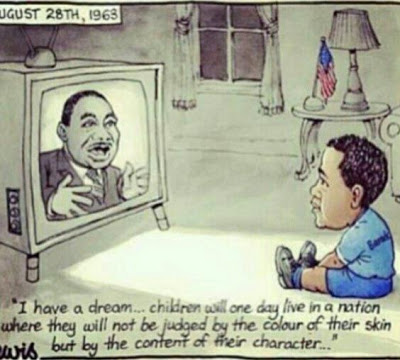
Martin Luther King – a hero? mla

One person who is admired for his outstanding achievements is Martin Luther King. This year (2013) we celebrate the 50th anniversary of his famous speech « I have a dream ».

Martin Luther King Jr. was a civil rights activist in the 1950s and 1960s. He led non-violent protests to fight for the rights of all people including African Americans. He hoped that America and the world could become a society where race would not impact a person’s civil rights.  Martin Luther King Jr. was born in Atlanta, GA on January 15, 1929. He went to Booker T. Washington High School. He was so smart that he skipped two grades in high school and started his college education at Morehouse College at the young age of fifteen. Martin’s father was a preacher which inspired Martin to pursue the ministry as well.

In his first major civil rights action, Martin Luther King Jr. led the Montgomery Bus Boycott. This started when Rosa Parks refused to move to give up her seat on a bus to a white man. As a result, Martin led a boycott of the public transportation system. The boycott lasted for over a year. It was very tense at times. Martin was arrested and his house was bombed, but in the end he prevailed and segregation on the Montgomery busses ended.

In 1963 Martin Luther King, Jr. helped to organize the famous March on Washington. Over 250,000 people attended this march in an effort to show the importance of civil rights legislation. They hoped for an end to segregation in public schools, protection from police abuse, and hoped to get laws preventing discrimination in employment.  It was at this march where Martin gave his « I have a Dream » speech. This speech has become one of the most famous speeches in history. The march and Martin’s speech were a success. The Civil Rights Act was passed a year later in 1964.

Martin Luther King Jr. was assassinated on April 4. 1968 in Memphis, TN. He was shot by James Earl Ray while standing on the balcony of his hotel.

Exchange this information with another student or use them in your presentations:

Did you know????

  • King was the youngest person to be awarded the Nobel Peace Prize in 1964.
  • Martin Luther King Day is a national holiday in the USA (3rd Monday of January)
  • There are over 730 streets in the United States named after Martin Luther King
  • One of his main influences was Mohandas Gandhi who taught protesting in a non-violent manner.
  • The name on his original birth certificate is Michael King. This was a mistake, however. He was supposed to be named after his father who was named for the leader of the Christian reformation movement, Martin Luther.
  • He is often referred to by his initials MLK.

To find out more about Martin Luther King (MLK) and his famous speech you can:

– Visit the BBC history website

– Read and listen to the article on VOA

– Try this listening activity (listen to part of the famous speech) 

– Watch the animated film about Martin Luther King’s life

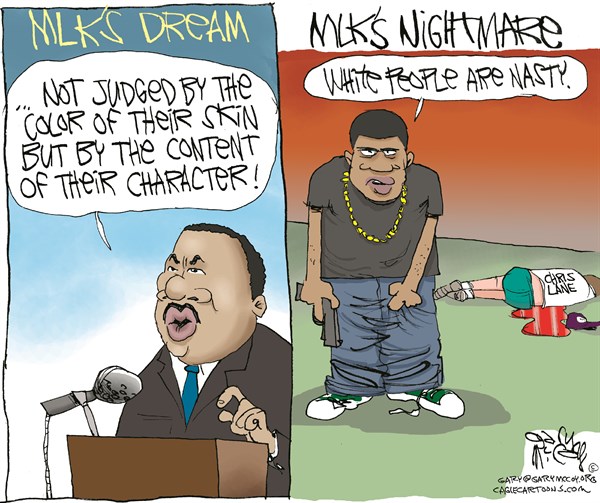
Cartoons for discussion:

mlkmlk cartoon