Catégorie : Compréhension orale

  • Préparez votre épreuve de compréhension orale

    Votre épreuve de compréhension orale approche? Préparez-vous dès maintenant en écoutant tous les jours des vidéos, podcasts et enregistrements en anglais.

    Voici quelques idées de sites pour vous aider:

    1. BBC English:

    Essayez « 6 minute English« : des reportages courts sur des sujets variés. Vous pouvez vous abonner au podcast, télécharger l’enregistrement et le texte.

    2. PodCaz Bac:

    Le site des langues de l’académie de La Réunion propose une rubrique consacrée à l’entraînement de la com­pré­hension de l’oral pour le bac. Il propose des fichiers audio d’une durée de 1 minute 30 (format imposé par l’épreuve), classés par notion. Vous y trouverez des fichiers pour la série STI2D également.

    3. La clé des Langues

    La Clé des langues met à votre disposition une banque d’enregistrements audio et vidéo correspondant au format requis pour l’épreuve de compréhension de l’oral. Vous pouvez télécharger les fichiers audio ainsi que des ressources pour vous aider à la compréhension.

    4. Medialingua

    Medialingua du Crdp-Aquitaine propose des documents audio ou vidéo à télécharger sur des thèmes variés.

    5. Audio Lingua

    Audiolingua propose des enregistrements en plusieurs langues sur des thèmes variés – vous pouvez choisir le niveau (B2) et la durée (60-90 secondes)

    6.CNN Student News

    Sur ce site vous pouvez visualiser le reportage du jour et lire le texte si besoin. Un niveau assez élevé!

    7. British Council

    Regardez des vidéos sur les différents aspects de la vie en Grande Bretagne ici et aussi sur cette page où vous trouverez des vidéos sur des sujets très variés!


  • St Patrick’s Day


    ST-PATRICKS-DAY2-images-and-graphics

    Here are a few links to practice your listening comprehension and also learn about the myths and legends behind St Patrick’s Day

    Videos on the « History » Channel

    Things you didn’t know about St Patrick’s Day : video

    Why does the colour green represent this holiday? : video

    Was St Patrick Irish? : video


    Finally here are some newspaper articles on the subject:

    Facts and figures (Guardian)

    How Irish are you ? A quiz and some myths about St Patrick’s Day (Daily Telegraph)


  • Back to school soon?

    The holidays are coming to an end and it’s the best time to start reading and listening to videos and interviews in English. Just 15 minutes every day!

    Here are a few links to help you

    The British Council website has a video zone where you will find videos on lots of different topics and also listening skills practice (choose B1 or B2)

    The BBC website has a « 6 minute English » series with extremely varied topics that will help you learn lots of new vocabulary

    Film English is a website with short films in English

    Enjoy the rest of your holidays! 🙂

  • Is progress always positive?

    share-ideas_001

    Thank you « chbo78 » for suggesting these videos! They really help illustrate the negative aspects of the idea of progress: what negative impacts can progress have on our society and on our planet?

    « Can we auto-correct humanity? »

    « Dear future generations: sorry » 

    « Why I think this world should end »

    This is what I want this blog to be about: helping each other and sharing ideas (without paying!!)

    Keep contributing!!

    Another interesting report on the bad effects a smartphone can have on your sleep:

    http://www.bbc.co.uk/news/health-26899454

  • Red Nose Day – Friday 13th March 2015

    téléchargement

    On Friday 13th March 2015 it’s Red Nose Day in the UK! But what exactly is Red Nose Day and why does it take place?

    The first Red Nose Day (RND) was held on 5 February 1988, when it was launched as a National Day of Comedy, and since then they have been on the second or third Friday in March. Red Nose Day is often treated as a semi-holiday for example, many schools have red-themed non-uniform days. The day culminates in a live telethon event on BBC One, starting in the evening and going through into the early hours of the morning, but other money-raising events take place. As the name suggests, the day involves the wearing of red noses which are available, in exchange for a donation, from supermarkets and charity shops.

    Here are a few articles and links about this fun day!

    A reading comprehension on the British Council website

    http://youtu.be/NIS4G-6yniY

    http://youtu.be/eTeLGD0p7pI

    The Official Red Nose Day Page

    The official Comic Relief Page

    Have some fun here

  • Improve your listening comprehension!

    Quotation-E-C-Myers-learning-Meetville-Quotes-150108

    To help improve your listening comprehension here are a few links to pages where you will find videos in English. Please feel free to add any other links in the comments below!

    – the brilliant website : http://film-english.com/ which is updated regularly (and also gives lesson plans for teachers!)

    – the British Council video zone – with listening comprehension exercises

    – the British Council video UK – short videos about life and culture in the UK

    – the BBC 6-minute English

    – ESL listening comprehension – short film clips with listening comprehension exercises

    Post your favourite English videos below!

  • The Ebola outbreak

    ebola

    The Ebola outbreak is currently in the news and even more so now that several cases have been detected in the USA.

    What exactly is Ebola? Is there a cure to this deadly disease? How can countries work together to reduce the risk of the disease spreading?

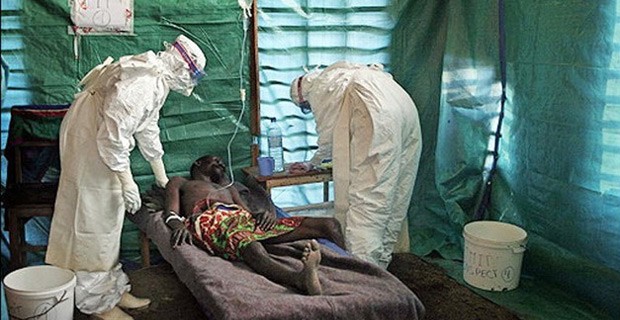
    Ebola – or Ebola haemorrhagic fever (EHF) – is a really deadly virus: 50% to 90% of people who catch it die from it. But there are a few forms of the virus which have been identified by scientists and given the right medical care and treatment, you can recover. Ebola was first spotted in the African countries of Sudan and the Democratic Republic of the Congo in 1976. In the space of five months in that year, 284 people in Sudan caught the virus. It killed 117 of them.

    You can catch it through direct contact with the body fluids of an infected person such as blood and saliva. It is not airborne like the flu so is more difficult to catch but is very infectious: so infected people have to be kept separate to reduce the risk of it spreading. Healthcare workers who have looked after sick patients have also been infected.

    For the moment there is no known cure however a new experimental drug, ZMapp, has been used in the US on health workers and a UK nurse who caught the disease in Africa. They recovered from the virus.

    The World Health Organization warns greater global efforts are needed to combat the Ebola virus, which is spreading ever faster in West Africa despite efforts to contain it. Barack Obama and EU leaders took part in a videoconference on Wednesday 15th October to discuss the growing Ebola crisis following warnings that the outbreak could grow to 10,000 new cases a week within two months. They discussed what further action can be taken to help stop the spread of the virus in west Africa and how passengers arriving from Africa can be screened to prevent the disease spreading further.

    Here are a few videos that explain more about this outbreak.

    What is Ebola? – in 60 seconds 

    An interactive video : Ebola – the virus posing a deadly threat to millions

    Documents, videos and articles on the BBC website

    Progress towards a vaccine : video

    Vocabulary exercises about vaccines

    Ideas for a debate about compulsory vaccinations

  • Social media – is it really progress?

    Two interesting videos about the negative sides of social media

    The selfie : http://film-english.com/2014/10/06/selfie/

    Look up –  a film about the isolation caused by the use of new technology http://film-english.com/2014/09/29/look-up/

  • Videos in English

    A great site with lots of videos about different aspects of British and American culture with comprehension exercises:

    http://www.letshavefunwithenglish.com/videos.html

  • Nelson Mandela : one of the most inspiring figures of the 20th century

    OBIT_NelsonMandela_1918_2013_131205_16x9_992

    Nelson Mandela 1918-2013

     Rolihlahla Mandela was born in Transkei, South Africa on 18 July 1918 and was given the name of Nelson by one of his teachers. His father Henry was a respected advisor to the Thembu royal family.

    ANC involvement

    Mandela was educated at the University of Fort Hare and later at the University of Witwatersrand, he qualified in law in 1942. He became increasingly involved with the African National Congress (ANC), a multi-racial nationalist movement trying to bring about political change in South Africa.

    In 1948, the National Party came to power and began to implement a policy of ‘apartheid’, or forced segregation on the basis of race. The ANC carried out a campaign of passive resistance against apartheid laws.

    In 1952, Mandela became one of the ANC’s deputy presidents. By the late 1950s, faced with increasing government discrimination, Mandela, his friend Oliver Tambo and others began to move the ANC in a more radical direction. In 1956, Mandela went on trial for treason. The court case lasted five years, and finally Mandela was acquitted.

    In March 1960, 69 black anti-apartheid demonstrators were killed by police at Sharpeville. The government declared a state of emergency and banned the ANC. In response, the organisation abandoned its policy of non-violence and Mandela helped establish the ANC’s military wing ‘Umkhonto we Sizwe’ or ‘The Spear of the Nation’. He was appointed its commander-in-chief and travelled abroad to receive military training and to find support for the ANC. On his return he was arrested and sentenced to five years in prison. In 1963, Mandela and other ANC leaders were tried for plotting to overthrow the government by violence. The following year Mandela was sentenced to life imprisonment. He was held in Robben Island prison, off the coast of Cape Town, and later in Pollsmoor Prison on the mainland. During his years in prison he became an international symbol of resistance to apartheid.

    In 1990, the South African government responded to internal and international pressure and released Mandela, at the same time lifting the ban against the ANC. In 1991 Mandela became the ANC’s leader.

    He was awarded the Nobel Peace Prize together with FW de Klerk, then president of South Africa, in 1993. The following year South Africa held its first multi-racial election and Mandela was elected its first black president.

    In 1998, he was married for the third time to Graça Machel, the widow of the president of Mozambique. Mandela’s second wife, Winnie, whom he married in 1958 and divorced in 1996, remains a controversial anti-apartheid activist.

    In 1997 he stepped down as ANC leader and in 1999 his presidency of South Africa came to an end.

    In 2004, Mandela announced his retirement from public life, although his charitable work continued. On 29 August 2007, a permanent statue to him was unveiled in Parliament Square, London.

    He died on 5 December 2013, aged 95.

    To learn more about Nelson Mandela’s life you can visit these pages:

    – Watch the video on the BBC Website: Obituary

    – Watch the video on the Guardian newspaper website: http://www.telegraph.co.uk/news/worldnews/nelson-mandela/8286419/Nelson-Mandela-obituary-part-one-one-of-the-most-inspiring-figures-of-the-20th-century.html

    – Learn about the timeline of Mandela’s life with videos : BBC News

    – Learn some of Mandela’s popular quotes

    – Watch the video on the History channel

    – How would Mandela have used social media if it has existed? Watch the Video here – thank you to http://www.teachermanigat.com/ for the link!

    To learn more about apartheid:

    – You can visit the excellent Apartheid museum website

    To improve your listening comprehension :

    – Online exercises here

    To improve your reading comprehension:

    – Learn all about Mandela and apartheid here

    Tips for your oral presentation!

    Do you consider Nelson Mandela to be a modern-day hero? What has he achieved for black South Africans? How has their life become better today? Does this make him a hero?This topic can not only illustrate the notion of myths and heroes but also the idea of progress: after racial segregation during colonial times in South Africa, the struggle that led to the abolition of apartheid has brought about a great number of changes for the black population.Finally this topic could be the perfect illustration for the notion of places and forms of power:

    Apartheid caused significant internal resistance and violence, and a long arms and trade embargo against South Africa. There were many uprisings and protests leading to  the imprisoning of anti-apartheid leaders. As unrest spread and became more effective and militarised, state organisations responded with repression and violence. Along with the sanctions placed on South Africa by the international community, this made it increasingly difficult for the government to maintain the regime. Apartheid reforms in the 1980s failed to stop the mounting opposition, and in 1990 President de Klerk began negotiations to end apartheid. There were multi-racial democratic elections in 1994 that were won by the African National Congress under Nelson Mandela.