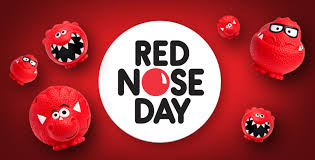
On Friday 13th March 2015 it’s Red Nose Day in the UK! But what exactly is Red Nose Day and why does it take place?
The first Red Nose Day (RND) was held on 5 February 1988, when it was launched as a National Day of Comedy, and since then they have been on the second or third Friday in March. Red Nose Day is often treated as a semi-holiday for example, many schools have red-themed non-uniform days. The day culminates in a live telethon event on BBC One, starting in the evening and going through into the early hours of the morning, but other money-raising events take place. As the name suggests, the day involves the wearing of red noses which are available, in exchange for a donation, from supermarkets and charity shops.
Here are a few articles and links about this fun day!
A reading comprehension on the British Council website
To help improve your listening comprehension here are a few links to pages where you will find videos in English. Please feel free to add any other links in the comments below!
– the brilliant website : http://film-english.com/ which is updated regularly (and also gives lesson plans for teachers!)
– the British Council video zone – with listening comprehension exercises
– the British Council video UK – short videos about life and culture in the UK
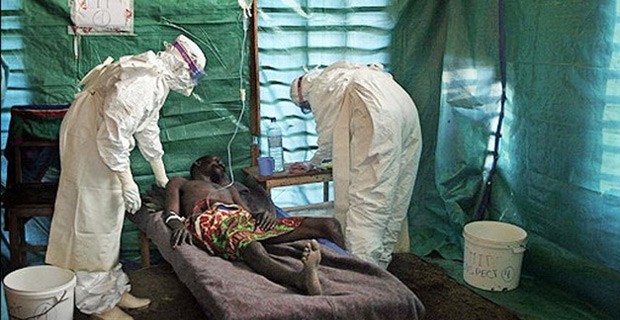
The Ebola outbreak is currently in the news and even more so now that several cases have been detected in the USA.
What exactly is Ebola? Is there a cure to this deadly disease? How can countries work together to reduce the risk of the disease spreading?
Ebola – or Ebola haemorrhagic fever (EHF) – is a really deadly virus: 50% to 90% of people who catch it die from it. But there are a few forms of the virus which have been identified by scientists and given the right medical care and treatment, you can recover. Ebola was first spotted in the African countries of Sudan and the Democratic Republic of the Congo in 1976. In the space of five months in that year, 284 people in Sudan caught the virus. It killed 117 of them.
You can catch it through direct contact with the body fluids of an infected person such as blood and saliva. It is not airborne like the flu so is more difficult to catch but is very infectious: so infected people have to be kept separate to reduce the risk of it spreading. Healthcare workers who have looked after sick patients have also been infected.
For the moment there is no known cure however a new experimental drug, ZMapp, has been used in the US on health workers and a UK nurse who caught the disease in Africa. They recovered from the virus.
The World Health Organization warns greater global efforts are needed to combat the Ebola virus, which is spreading ever faster in West Africa despite efforts to contain it. Barack Obama and EU leaders took part in a videoconference on Wednesday 15th October to discuss the growing Ebola crisis following warnings that the outbreak could grow to 10,000 new cases a week within two months. They discussed what further action can be taken to help stop the spread of the virus in west Africa and how passengers arriving from Africa can be screened to prevent the disease spreading further.
Here are a few videos that explain more about this outbreak.
Il est souvent difficile de trouver des idées pour illustrer chaque notion. N’oubliez pas que certains sujets peuvent être utilisés pour illustrer 2 ou même 3 notions – prenons comme exemple l’histoire de Rosa Parks:
– (myths et héros) une figure emblematique de la lutte contre la ségrégation raciale aux États-Unis
– (lieux et formes de pouvoir) les raisons de la lutte contre la ségrégation raciale aux Etats Unis
– (idée du progrès) – comparaison des conditions de vie des afro-américains pendant les années 60 avec les conditions aujourd’hui (un président noir).
Voici donc quelques idées de sujets pour illustrer la notion « Lieux et formes de pouvoir ».
Places and forms of power
« Places » could be important buildings or institutions that represent a certain form of power, for example Buckingham Palace – a symbol of the British monarchy, the White – a symbol of the American presidency.
A place can also be a country or a state – for example the USA is a state which is powerful enough to influence events throughout the world (superpower) and China is a major economic power in today’s world.
What exactly is power?
It is the ability to control others, events, or resources; the ability to make things happen despite obstacles, resistance, or opposition. This of course leads to conflict between those who have power and those who don’t.
Resistance to power
There are many examples of resistance to power:
– the African-American civil rights movement (Rosa Parks, Martin Luther King Junior, Malcom X….)
– interesting page with lots of links about the film « The Butler »
– the struggle for liberation in South Africa (Apartheid, Nelson Mandela)
– the Suffragettes’ fight for women’s right to vote
Video « Bad romance » : a parody music video paying homage to Alice Paul and the generations of brave women who joined together in the fight to pass the 19th Amendment, giving women the right to vote in 1920.
–Women’s rights movement in the US
The ability to influence others
The power of the media
If we look at the power of the media for example we can see how much it can influence the public opinion. The mass media plays an important role in forming our personality, enriching our knowledge, providing us with information of any kind.
Mass media can have an effect on our personal identity: it can help us to feel that we are part of a group (social networks) but on the other hand it can contribute to a feeling of isolation.
Media can have a strong political influence or can shape the way we perceive certain groups of society – minority groups, pressure groups…mass media is powerful because it makes us believe what is acceptable and unacceptable behaviour (reality TV).
However it can also have harmful impact on society:
– On-screen violence leading to actual violence (violent video games/films)
– Identity or financial fraud on the internet people to fraud, especially identity fraud.
– the dangers for children who are able to access Internet material inappropriate for their age.
– The Internet can facilitate an invasion of privacy – (chat rooms, social networks, bullying)
Economic and political power
– The European Union – past, present and future
– the « superpowers » ( states with a dominant position in the international system with the ability to influence events and its own interests and project power on a worldwide scale to protect those interests – e.g. USA)
– emerging countries (Brazil, Russia, India and China, are now playing an increasingly important role in the global economy, with this group of four powerful developing economies sometimes referred to as the BRIC countries)
The power of guns
– The debate on gun control in the USA
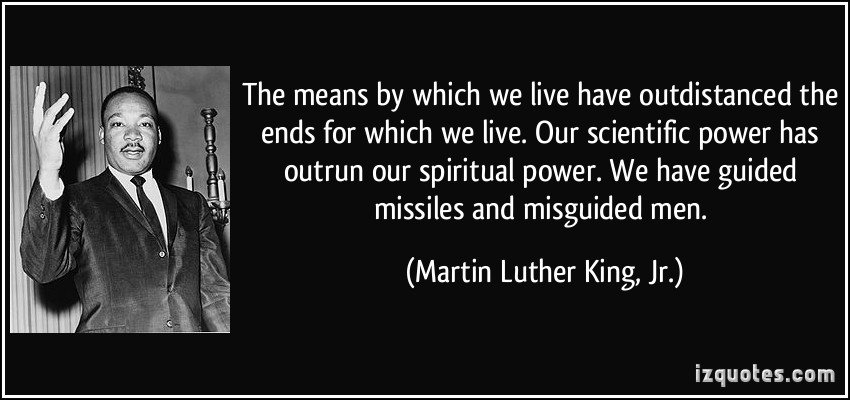
Finally an interesting quote to illustrate this notion:
Rolihlahla Mandela was born in Transkei, South Africa on 18 July 1918 and was given the name of Nelson by one of his teachers. His father Henry was a respected advisor to the Thembu royal family.
ANC involvement
Mandela was educated at the University of Fort Hare and later at the University of Witwatersrand, he qualified in law in 1942. He became increasingly involved with the African National Congress (ANC), a multi-racial nationalist movement trying to bring about political change in South Africa.
In 1948, the National Party came to power and began to implement a policy of ‘apartheid’, or forced segregation on the basis of race. The ANC carried out a campaign of passive resistance against apartheid laws.
In 1952, Mandela became one of the ANC’s deputy presidents. By the late 1950s, faced with increasing government discrimination, Mandela, his friend Oliver Tambo and others began to move the ANC in a more radical direction. In 1956, Mandela went on trial for treason. The court case lasted five years, and finally Mandela was acquitted.
In March 1960, 69 black anti-apartheid demonstrators were killed by police at Sharpeville. The government declared a state of emergency and banned the ANC. In response, the organisation abandoned its policy of non-violence and Mandela helped establish the ANC’s military wing ‘Umkhonto we Sizwe’ or ‘The Spear of the Nation’. He was appointed its commander-in-chief and travelled abroad to receive military training and to find support for the ANC. On his return he was arrested and sentenced to five years in prison. In 1963, Mandela and other ANC leaders were tried for plotting to overthrow the government by violence. The following year Mandela was sentenced to life imprisonment. He was held in Robben Island prison, off the coast of Cape Town, and later in Pollsmoor Prison on the mainland. During his years in prison he became an international symbol of resistance to apartheid.
In 1990, the South African government responded to internal and international pressure and released Mandela, at the same time lifting the ban against the ANC. In 1991 Mandela became the ANC’s leader.
He was awarded the Nobel Peace Prize together with FW de Klerk, then president of South Africa, in 1993. The following year South Africa held its first multi-racial election and Mandela was elected its first black president.
In 1998, he was married for the third time to Graça Machel, the widow of the president of Mozambique. Mandela’s second wife, Winnie, whom he married in 1958 and divorced in 1996, remains a controversial anti-apartheid activist.
In 1997 he stepped down as ANC leader and in 1999 his presidency of South Africa came to an end.
In 2004, Mandela announced his retirement from public life, although his charitable work continued. On 29 August 2007, a permanent statue to him was unveiled in Parliament Square, London.
He died on 5 December 2013, aged 95.
To learn more about Nelson Mandela’s life you can visit these pages:
Do you consider Nelson Mandela to be a modern-day hero? What has he achieved for black South Africans? How has their life become better today? Does this make him a hero?This topic can not only illustrate the notion of myths and heroes but also the idea of progress: after racial segregation during colonial times in South Africa, the struggle that led to the abolition of apartheid has brought about a great number of changes for the black population.Finally this topic could be the perfect illustration for the notion of places and forms of power:
Apartheid caused significant internal resistance and violence, and a long arms and trade embargo against South Africa. There were many uprisings and protests leading to the imprisoning of anti-apartheid leaders. As unrest spread and became more effective and militarised, state organisations responded with repression and violence. Along with the sanctions placed on South Africa by the international community, this made it increasingly difficult for the government to maintain the regime. Apartheid reforms in the 1980s failed to stop the mounting opposition, and in 1990 President de Klerk began negotiations to end apartheid. There were multi-racial democratic elections in 1994 that were won by the African National Congress under Nelson Mandela.
You can then click on the different stories told by Londoners, choose your 3 favourite videos and then submit your choices. You may win an all-expenses-paid trip to London.
If you don’t win, it’s an excellent way of learning about the different monuments and places to visit in London.
It is an excellent way to learn all about London and the history of the different monuments! And also excellent practice for the listening comprehension part of your exam!
The American dream is the notion that the American social, economic, and political system makes success possible for every individual. Someone who manages to achieve their version of the American dream is said to be « living the dream ».
Many people criticize the idea of the American dream because they say that it is impossible for everyone to be able to fulfill their dreams – there are still inequalities in class, race, religion and ethnicity preventing people from « living the dream ».
The idea of the American dream is older than the USA itself – it dates back to the 1600s, when people began to have hopes for what was a new and largely unexplored continent to European immigrants. People dreamt of owning land and establishing a prosperous business and hoped that this would make them happier.
Today’s the definition of the American dream is much different. Most people nowadays hope that they will get married, have two children and live in a three-bedroom traditional home. Rather than looking for great wealth or success, people hope to avoid poverty or loneliness.
Improve your listening comprehension!
You can listen to people talking about what the American dream is here
You can watch a political ad talking about the American dream here
You can watch a BBC report about the American dream here
You can listen to different people talking about the American dream on the Academie de Paris website
Ellis Island
The Voyage to Freedom
Coming to America appealed to many immigrants from the southern and northern parts of Europe as they found a way out of situations of persecution and oppression as well as political and economic difficulties. Once they arrived in America, some passengers were allowed to go on shore without making their way through inspection. This privilege was given to those considered to be first and second class citizens. All the other « lower class » citizens were shipped off to Ellis Island to go through inspection.
To travel to America immigrants had to pay from twelve dollars to sixty dollars per person, which meant that families had to save their money for years before they could travel to America. Even when the money was available, families still had to go through the process of being screened before they could get on board a ship to sail to America. Once they made it to their destination, passengers had to go through a physical inspection by doctors before they were set free into their new life or were detained because of issues that the doctors found. Sometimes, what was supposed to be a happy ending to coming to America ended in disappointment. This happened when a family member was not allowed into America and was sent back to where he came from.
Ellis Island and the Immigrant- Annie Moore
On January 1, 1892, a ship coming in from Ireland, landed at Ellis Island with a load of Irish Immigrants. The first person to step foot on the island was Annie Moore, a 15 year old girl. The teenager was presented with a gold coin; its monetary value was worth ten dollars for being the first person to step foot on the newly constructed Ellis Island. Annie and her brothers had spent 12 days on the ship as they set out to join their parents who were already living comfortably in New York. This girl and her brothers are recognized as the first people to arrive on the renovated island. A statue with the image of Annie and her younger brothers now stands at the Ellis Island Museum.




 Anglais pour le BAC