The story behind Halloween – Myths and Legends


Haunted-House-with-Bats

history_of_halloween_large

Halloween is celebrated every year on the 31st October, but do you know the origin of this celebration?

Halloween is a time of celebration and superstition. It is thought to have originated with the ancient Celtic festival of « Samhain », when people used to light bonfires and wear costumes to scare away ghosts. In the eighth century, Pope Gregory III designated November 1 as a time to honor all saints and martyrs; the holiday, All Saints’ Day, incorporated some of the traditions of Samhain. The evening before was known as « All Hallows’ Eve » and this later became known as « Halloween ».

Over the years, Halloween has evolved into a fun and family event with activities  for children such as trick-or-treating, when children dress as monsters, ghosts and witches and knock on neighbours’ doors to ask for sweets and candy.

The story of Halloween can be used to illustrate the notion of myths and heroes (the different myths and legends surrounding the Halloween celebration) but also the notion of Spaces and Exchanges: Halloween started in America when immigrants came from Ireland (potato famine) and Scotland, bringing their customs and traditions to the United States. They were proud of their Celtic origins and they called Halloween « Oidche Shamhna » (Night of Samhain) and kept the traditional observances. The Jack-o-lantern is the festival light for Halloween and is the ancient symbol of a damned soul. Originally the Irish would carve out turnips as but when they emigrated to America they could not find many turnips. They found however an abundance of pumpkins and they have been an essential part of Halloween celebrations ever since. « Irish and Scottish immigrants carried versions of the tradition to North America in the nineteenth century.

Here are a few links to help you learn about this day:

The history of Halloween explained – link to a video with transcript and vocabulary explanations

The real story behind Halloween – link to a video on the History channel

Monster Quest – Are ghosts real? This is a 46-minute video about an investigation into the most haunted houses in America (don’t watch it alone!!)

– Read about the history of Halloween here and some Halloween superstitions here

– A reading comprehension about the history of Halloween with questions to check your understanding

– Myths and legends about Halloween

American history

Several links to help you learn about the most important events in the history of the USA. Feel free to comment and add any other links below!

– Great moments in US history: http://listverse.com/2009/11/25/10-great-moments-in-us-history/

– Important events in US history: http://listverse.com/2011/07/14/top-10-important-events-in-us-history/

– the history of Ellis Island : http://www.history.com/topics/american-history/videos#deconstructing-history-ellis-island

– the Statue of Liberty: http://www.history.com/topics/american-history/videos#the-statue-of-liberty

– D-Day : http://www.history.com/topics/american-history/videos#d-days

– Rosie the riveter (Idea of progress/myths and heroes) : http://www.history.com/news/ask-history/who-was-the-real-rosie-the-riveter

Homeless Boston man hailed as a hero

A homeless man who returned a backpack containing $40,000 in cash and travelers checks has been rewarded by well-wishers who have donated more than $75,000 to help him.

Former Boston courthouse employee Glen James had lost his job because of health problems, but said he would not have tried to keep any of the money he found at the weekend.

After hearing about his story a Virginia man set up a GoFundMe website which has raised thousands to help Mr James in just one day

You can read more about the story here: New York Daily News

What would you do if you found $40,000 in the street? Would you keep it or would you hand it in to the police?

Do you consider this man to be a modern-day hero?

The American Dream

0711_ms_american_dream_v8

What is the American dream?

The American dream is the notion that the American social, economic, and political system makes success possible for every individual. Someone who manages to achieve their version of the American dream is said to be « living the dream ».

Many people criticize the idea of the American dream because they say that it is impossible for everyone to be able to fulfill their dreams – there are still inequalities in class, race, religion and ethnicity preventing people from « living the dream ».

The idea of the American dream is older than the USA itself – it dates back to the 1600s, when people began to have hopes for what was a new and largely unexplored continent to European immigrants. People dreamt of owning land and establishing a prosperous business and hoped that this would make them happier.

Today’s the definition of the American dream is much different. Most people nowadays hope that they will get married, have two children and live in a three-bedroom traditional home. Rather than looking for great wealth or success, people hope to avoid poverty or loneliness.

Improve your listening comprehension!

You can listen to people talking about what the American dream is here

You can watch a political ad talking about the American dream here

You can watch a BBC report about the American dream here

You can listen to different people talking about the American dream on the Academie de Paris website

Ellis Island

The Voyage to Freedom

Coming to America appealed to many immigrants from the southern and northern parts of Europe as they found a way out of situations of persecution and oppression as well as political and economic difficulties. Once they arrived in America, some passengers were allowed to go on shore without making their way through inspection. This privilege was given to those considered to be first and second class citizens. All the other « lower class » citizens were shipped off to Ellis Island to go through inspection.

To travel to America immigrants had to pay from twelve dollars to sixty dollars per person, which meant that families had to save their money for years before they could travel to America. Even when the money was available, families still had to go through the process of being screened before they could get on board a ship to sail to America. Once they made it to their destination, passengers had to go through a physical inspection by doctors before they were set free into their new life or were detained because of issues that the doctors found. Sometimes, what was supposed to be a happy ending to coming to America ended in disappointment. This happened when a family member was not allowed into America and was sent back to where he came from.

Ellis Island and the Immigrant- Annie Moore

On January 1, 1892, a ship coming in from Ireland, landed at Ellis Island with a load of Irish Immigrants. The first person to step foot on the island was Annie Moore, a 15 year old girl. The teenager was presented with a gold coin; its monetary value was worth ten dollars for being the first person to step foot on the newly constructed Ellis Island. Annie and her brothers had spent 12 days on the ship as they set out to join their parents who were already living comfortably in New York. This girl and her brothers are recognized as the first people to arrive on the renovated island. A statue with the image of Annie and her younger brothers now stands at the Ellis Island Museum.

Learn about Ellis Island in this History Channel report.

.

Myths and heroes (3)

  images                     téléchargement

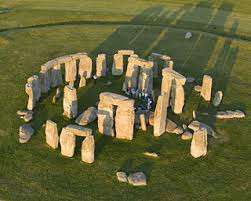
Nessie, the Loch Ness Monster                                        Stonehenge


What exactly is a myth?

A myth is a story that may or may not be true. There are often no records or proof that the myth happened. Some myths have factual origins, while others are completely fictional. However myths are more than simple stories – many serve a more profound purpose in ancient and modern cultures. Mythology is a collection of traditional stories that express the beliefs or values of a group of people. The stories often focus on human qualities such as good and evil.

They are often considered to be sacred and may explain how things came to be. The myths gave human emotions and qualities to the super-natural beings who were the heroes of their stories.

A myth can also be a story that tries to explain the way the world is. People have always wanted to know the reasons for natural phenomena, for example how was the Universe created, what is the reason for thunder……. Myths often include gods and goddesses and other supernatural characters who have the power to make extraordinary things happen and are popular even when people know the actual reasons for the natural phenomena. Religion, gods, and myths were created when people tried to have an answer to these questions.

You can read about some famous myths here: Famous Myths

You can read about some famous British myths and legends here: Top ten British myths and legends


Talking about the future….what if everyone had a car?

This video comes from the new BBC series What If? : a series which looks into the future in key areas of science, politics, education and our personal life.

In this video BBC News looks at the ways in which new technology can help to keep us all mobile.

There are more than a billion cars in the world today – and by the middle of the century there could be up to four times as many, as the growing middle classes of countries like India, China and Brazil seek the freedom and status car ownership appears to offer.

But if so many people want to drive – how will we prevent global gridlock?


gridlock= saturation, bouchons (sur la route), impasse (dans des discussions)


Phonebloks – the smartphone that never dies

Phonebloks4-630x325

Could this be the phone of the future? The idea for the world’s first sustainable (durable) smartphone is certainly creating a buzz on the social networks at the moment!

Have you ever broken your phone screen and decided to buy a new phone? Or perhaps you don’t have enough memory for all your music downloads? Would you like to be able to build your own phone? Phonebloks could be the solution.

Dutchman Dave Hakkens is currently developing Phonebloks, a sustainable smartphone made up of small, easily replaced modules. In theory, the smartphone would never have to be replaced, each part is removable and this makes it easier to personalize your phone.  For example, if you like taking photos you could incorporate a better camera model, of the brand of your choice.

The idea is currently making a buzz on the social networks and interested parties or individuals can support the idea via Twitter or Facebook. The developer is not asking for money but wants to know if demand would be large enough to be able to launch (lancer) it.

Some critics have said that it will be impossible to make the idea work, that it will be difficult to make all the different parts compatible. It has also been named « the Lego phone »!

What do you think? Would you be prepared to give up your smartphone for this one?

Watch the video below:

http://news.cnet.com/8301-17938_105-57602510-1/phonebloks-a-modular-phone-you-update-a-piece-at-a-time/

The idea of progress

Do you consider the invention of smartphones a progress?

You can talk to your friends at any time of the day (or night!), keep in touch with friends and family abroad, read your emails, see your friends’ holiday photos on Facebook, comment on the news on Twitter, download music, play games………….

But how many hours do you actually spend on your phone? Have you ever counted?

2011-04-30-smartphone-waste-time

Do smartphones bring people closer through modern technology or are they making us more isolated? Technology and smartphones are not bad, but they can take too much time out of our lives. They can be major distractions that hinder our relationships.

Another disadvantage of smartphones is the amount of waste generated: new models are constantly being released, creating a « need » to have the latest model. But what do you do with your old phone? Do you sell it? Exchange it? Recycle it? Put it in a drawer?

Read about how phones can be recycled here: learn about recycling

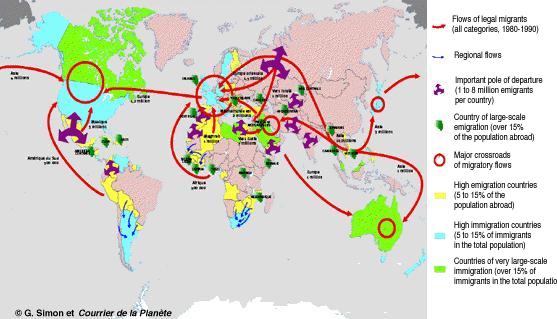
Global migrants

article_image


In this episode of 6 Minute English, Rob and Jennifer talk about why people move around the world to find work. These people are known as « global migrants ».

Some 214 million people are international migrants, living in a different country from the one in which they were born. There are plenty with high-level skills who end up working for at least part of their careers outside their home country.

Some take work they are overqualified for, because it still pays better than what is available at home. This has led to a brain drain from some developing countries.

Watch the BBC 6-minute English report to learn more about global migration


Read more about the topic here

and here

Ideas for « Places and forms of power »

What are the most famous places of power in the English-speaking world?

1. The White House

The White House is in Pennsylvania Avenue in Washington, D.C., the capital of the United States. The Washington Monument, the Capitol Building, the Jefferson Memorial, the Pentagon, and the Lincoln Memorial are also in the Washington, D.C. area. 

washington dc

For two hundred years, the White House has stood as a symbol of the Presidency, the United States government, and the American people. Its history, and the history of the nation’s capital, began when President George Washington signed an Act of Congress in December of 1790.

White House Facts

  • There are 132 rooms, 32 bathrooms, and 6 levels to accommodate all the people who live in, work in, and visit the White House. There are also 412 doors, 147 windows, 28 fireplaces, 7 staircases, and 3 elevators.
  • President Theodore Roosevelt officially gave the White House its current name in 1901.
  • The White House receives approximately 6,000 visitors a day.
  • With five full-time chefs, the White House kitchen is able to serve dinner to up to 140 guests
  • For recreation, the White House has a variety of facilities available to its residents, including a tennis court, a jogging track, swimming pool, cinema, billiards room, and a bowling lane.

You can take a virtual tour of the White House here

The official office of the President of the United States is the Oval Office. This room situated in the West Wing of the White House has become associated in Americans’ minds with the presidency itself  for example, President Richard Nixon speaking to Apollo 11 astronauts during their moonwalk.

An Oval Office adress, the television broadcast of a formal presidential speech from the office, is rare and reserved for occasions with a sense of gravity, as when President Ronald Reagan addressed the nation following the Space Shuttle Challenger Disaster, or President George W Bush addressed the nation on the evening of September 11, 2001.

More ideas to come……….!!!

Have fun learning history!

worldhistory1


Have you always found history boring? Do you find it difficult to learn your dates?

1. Here’s a fun way to learn about historical events on Historyteachers channel on You Tube :  http://www.youtube.com/user/historyteachers?feature=watch

You’ll never forget your dates again!

You can learn about

Henry VIII

William the Conqueror

Mary Queen of Scots

2. Another excellent video is Bad Romance: Women’s Suffrage – a parody music video paying homage to Alice Paul and the generations of brave women who joined together in the fight to pass the 19th Amendment, giving women the right to vote in 1920. (Could be used to illustrate the notion Myths and Heroes)

3. An excellent BBC video telling the story of Guy Fawkes and the Gunpowder Plot (I wish this kind of programme had existed when I was learning history!)