The fifth of November in the UK is Bonfire Night. What exactly is Bonfire Night and why do we celebrate it?
Here are a few articles and videos to explain:

The fifth of November in the UK is Bonfire Night. What exactly is Bonfire Night and why do we celebrate it?
Here are a few articles and videos to explain:
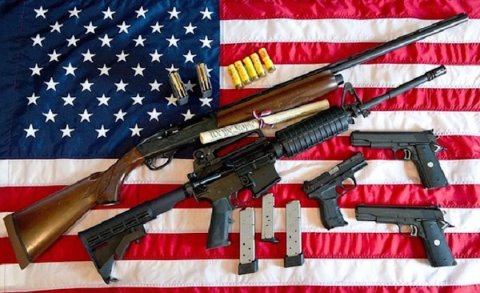
Here is an excellent article about gun violence in the USA – a topic which is very much in the news at that the moment and that can be used to illustrate the notion « Places and forms of power ».
The article includes a video of Obama’s speech after the Umpqau Community College shooting, tables and explanations about the problem and a video showing how some American politicians go to extreme lengths to show their support for gun rights: Senator Ted Cruz (republican) cooking bacon with a machine gun (!)
Finally there is a section on how other developed countries have had huge successes with gun control (Idea of progress/places and forms of power)
The holidays are coming to an end and it’s the best time to start reading and listening to videos and interviews in English. Just 15 minutes every day!
Here are a few links to help you
The British Council website has a video zone where you will find videos on lots of different topics and also listening skills practice (choose B1 or B2)
The BBC website has a « 6 minute English » series with extremely varied topics that will help you learn lots of new vocabulary
Film English is a website with short films in English
Enjoy the rest of your holidays! 🙂
A last minute idea that perhaps could be used in your oral exam!
Rihanna’s latest hit « American Oxygen » can be used to illustrate several notions –
Myths and heroes – the American dream: is it a myth or does it really exist? Martin Luther King….
Spaces and exchanges – immigration and the American dream. What makes people want to live in the USA?
Idea of progress – the civil rights movement and how life has changed for black people in the USA, space technology, pollution,
Places and forms of power – terrorism (twin towers), wars and the anti-war movement, riots, gun power
The lyrics:
Breathe in, this feeling
American oxygen
I say, you see, this is the American Dream
Young girl, hustlin’
On the other side of the ocean
She can be anything at all
America, America
I should, come see
Just close your eyes and breathe
Breathe out, breathe in
American oxygen
Every breath I breathe
Chasin’ this American Dream
We sweat for a nickel and a dime
Turn it into an empire
Breathe in, this feeling
American, American oxygen
American oxygen
Breathe in, this feeling
American oxygen
Breathe in, this feeling
American oxygen
You say, you see, this is the American Dream
Young boy, hustlin’
Tryna get the wheels in motion
But he can be anything at all
America, America
I say, can’t see
Just close your eyes and breathe
Breathe out, breathe in
American oxygen
Every breath I breathe
Chasin’ this American Dream
We sweat for a nickel and a dime
Turn it into an empire
Breathe in, this feeling
American, American oxygen
American oxygen
This is the new America
We are the new America
This is the new America
We are the new America
This is the new America
We are the new America
Breathe out, breathe in
American oxygen
Every breath I breathe
Chasin’ this American Dream
We sweat for a nickel and a dime
Turn it into an empire
Breathe in, this feeling
American, American oxygen
American oxygen
This is the new America
We are the new America
This is the new America
We are the new America
This is the new America
We are the new America
Source:http://www.directlyrics.com/rihanna-american-oxygen-lyrics.html
Après un weekend d’absence je découvre toutes vos questions! Etant toute seule à gérer le blog ça va prendre un peu de temps de répondre.
Il y a plus de 9000 visiteurs par jour sur le blog! Si vous pouvez, n’hésitez pas à proposer des réponses aux questions – le but du blog est d’être un lieu d’échange. Merci à tous ceux qui pourront aider en répondant aux nombreuses questions!
Good luck for your oral exams ! 🙂
Kate!

On Thursday 7th May the General Elections take place in the UK. It is traditionally held on the first Thursday in May once every five years in England, Wales, Scotland and Northern Ireland.
The 650 members of parliament (MPs) will be elected through 650 individual elections for a constituency. Each voter chooses a candidate in their area. The candidate with the most votes wins a seat in the House of Commons in the UK parliament, Westminster, London.
The main parties taking part in the election are the Conservatives (led by David Cameron), Labour (led by Ed Miliband), Liberal Democrats (led by Nick Clegg) and the United Kingdom Independance Party (led by Nigel Farage). The current Prime Minister is David Cameron, the leader of the Conservative Party. In the last General Election a coalition government was formed (also known as a hung parliament) with the Liberal Democrats because the Conservatives didn’t have an outright majority.
If one party wins more than half the seats (326) in the House of Commons, its leader becomes Prime Minister and forms a government. The Prime Minister’s official residence is at 10 Downing Street, London.
According to the Independant newspaper « Britain is heading for the most unpredictable general election in a generation as voters turn their backs on the established parties ». Support for the three main political parties is at an all-time low. So much so that it is possible that no single party will win a majority of seats in Parliament. The two main candidates are David Cameron – leader of the Conservatives and who has around a score of around 32% in the polls and Ed Miliband – leader of the Labour party who has around a 33% lead in the polls. However there is growing support for smaller parties like the UKIP and the Greens. The UKIP wants to cut immigration to the UK and quit the European Union – according to some polls they could win 15% of the vote. The Green party could possibly win 15% of the vote.
To learn more about the General Election here are some videos:
How does the General Election work?
The General Election explained (Election 2010)
How does Parliament work?
What happens if no-one wins?
Des vidéos très utiles et très claires avec quelques exemples pour l’épreuve d’expression orale.
(Source France TV Education)
Méthodologie expression orale
Places and forms of power
Myths and heroes
Spaces and exchanges
Idea of Progress
Vous êtes nombreux à me demander de vous aider à trouver des idées de « problématique » (key questions) pour vos oraux. Il n’est pas évident de proposer une problématique qui pourrait être utilisée par tout le monde car vous avez tous étudié des textes et documents différents. Je vais donc plutôt vous donner quelques idées de problématiques simples par notion… à vous de les adapter à vos textes et documents utilisés en cours.
Je vais mettre à jour l’article régulièrement – comme toujours sur le blog n’hésitez pas à proposer d’autres problématiques dans la partie « commentaires » – ça pourrait toujours inspirer les autres!
What is a modern-day/contemporary hero? What impact do they have on our lives?
How can an ordinary person make the world a better place?
Why are sports heroes so important in today’s society?
To what extent does Barack Obama represent the black American dream?
To what extent did Rosa Parks/ Martin Luther King/Malcolm X contribute to the improvement of black American’s rights?
To what extent do myths represent society’s values?
In today’s society to what extent is there a need for myths, something to believe in that is greater than we are?
What is the role of the media in the making of heroes?
Is it useful for society to have « superheroes »?
What is the role of the media in the rise and fall of certain « heroes »?
Why are myths and heroes so important to our society?
In what way are heroes portrayed in Hollywood movies? How does this reflect our society today?
From rags to riches: Self-made men/women – how did they do it?
The Queen of England : why do the British love her so much?
What drives people to leave their country to go and live in another country?
Is the American Dream still alive? What attracts immigrants to live in the USA?
Has the Olympic ideal of fair play and tolerance been now replaced by money, drugs and politics?
What are the different conflicts that have shaped the US society? What effect have they had on the USA as we know it today?
What are the advantages of moving to another country to study or find work?
To what extent does travelling to a foreign country broaden our horizons?
What impact does globalisation have on international exchanges?
Why do refugees choose to leave their countries? What difficulties do they face?
In what way does travelling broaden the mind?
What difficulties do immigrants face when they arrive in a new country?
To what extent does new technology isolate people?
Are social networking sites a threat to our private lives?
How has the internet modified our social behaviour and changed the way we communicate?
To what extent does progress change our vision of the others and of the world?
To what extent has technological progress made an impact on our environment?
Working from home – is it the end of productivity or the future of work?
How does modern technology affect today’s society? Does it have a positive or a negative effect?
To what extent has social progress over the past century led to an improvement in women’s rights?
What sort of social progress was made in the 20th century? How did it come about?
In what ways has progress made modern-day life better?
How has the internet changed today’s world?
How did the Civil Rights movement bring about progress in the USA?
What major technological/scientific breakthroughs have been made in the last decades and how have they changed our lives?
Are peoples rights progressing or regressing?
In what way does sport have the power to unite people in a way that little else can?
« Whoever controls the media controls the mind (Jim Morrison) » – how much power do the media have over us?
When power is misused how do people rebel against it?
In what ways do the social networks have power to influence public opinion?
To what extent can we say that schools and universities are instruments of power?
How powerful is the NRA (National Rifle Association)? How has it consistently succeeded in defeating new gun control legislation in the USA?
How have civil rights activists used nonviolent protest to bring about change in the USA?
Money is power and rare are the heads that can withstand the possession of great power (Benjamin Disraeli) : how far is this quote true?
What are the limits to power? In what ways can power be abused?
To what extent can education be a key to power?
With social networks and internet is it possible to limit the power of the media?
How do people exercise their power? What are the different tools used?
Thank you « chbo78 » for suggesting these videos! They really help illustrate the negative aspects of the idea of progress: what negative impacts can progress have on our society and on our planet?
« Can we auto-correct humanity? »
« Dear future generations: sorry »
« Why I think this world should end »
This is what I want this blog to be about: helping each other and sharing ideas (without paying!!)
Keep contributing!!
Another interesting report on the bad effects a smartphone can have on your sleep:

 Anglais pour le BAC