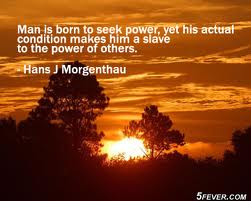
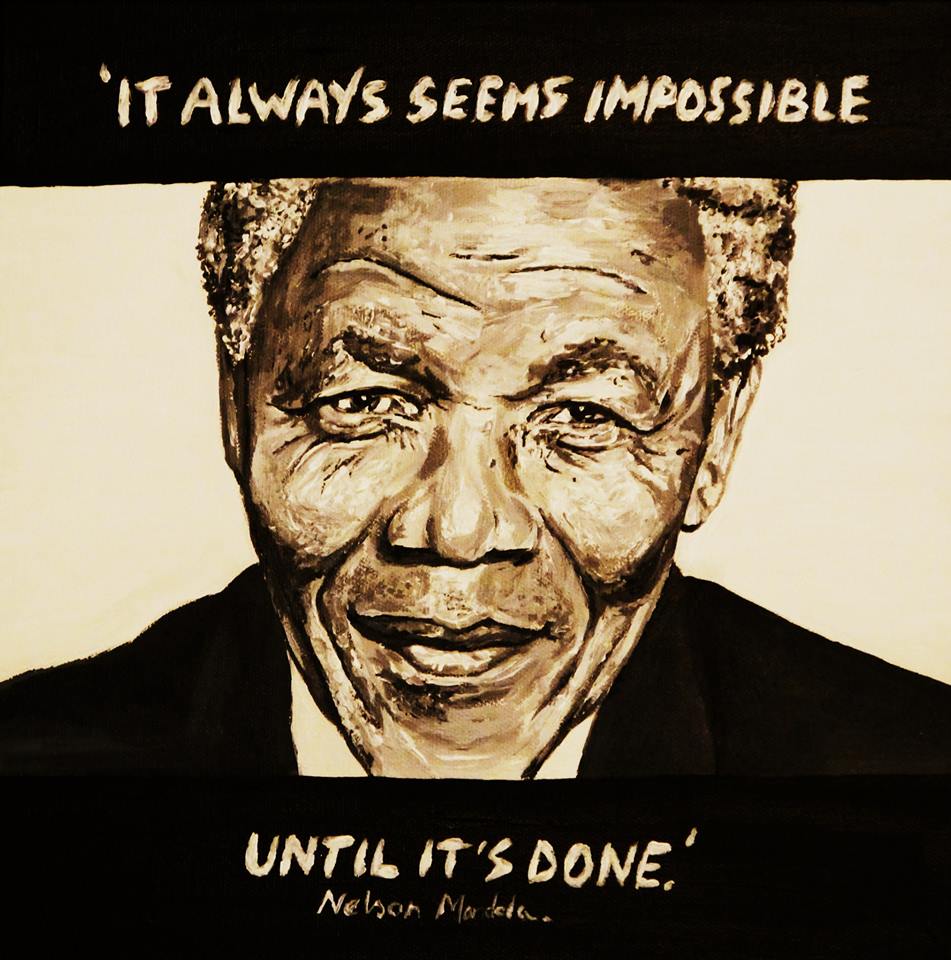
Some quotes to illustrate the different notions

1044077_1439228279642838_120533443_n

Believe in yourselves 😉

Here are some other useful quotes  – food for thought!

Myths and Heroes

– “The legacy of heroes is the memory of a great name and the inheritance of a great example. » – Benjamin Disraeli, British Prime Minister and Novelist
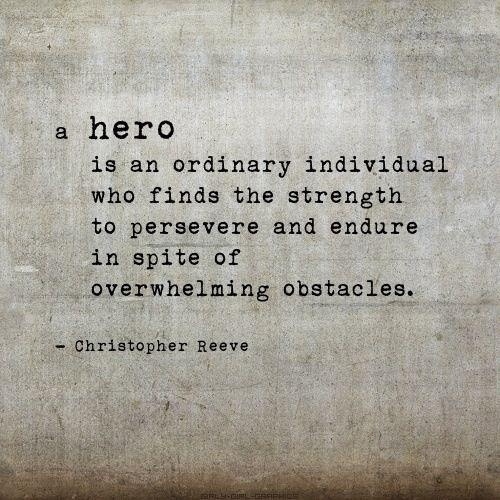
tumblr_mwdda7ROS01rrjjxto1_500

Quote by Christopher Reeve – otherwise known as Superman – who was paralysed after a horse-riding accident.

– « Myths which are believed in tend to become true » – George Orwell, English novelist and journalist


Spaces and Exchanges

–  » the exchange of students…should be vastly expanded…Information and education are powerful forces in support of peace. Just as war begins in the minds of men, so does peace »  – Dwight D Eisenhower, 34th President of the USA

– « A simple way to take measure of a country is to look at how many want in.. And how many want out » – Tony Blair, British Prime Minister

– Everywhere immigrants have enriched and strengthened the fabric of American life – John F Kennedy


Idea of Progress

– « All progress is precarious, and the solution of one problem brings us face to face with another problem » – Martin Luther King Junior

– « Progress is impossible without change, and those who cannot change their minds cannot change anything » – George Bernard Shaw, Nobel Peace Prize for Literature 1925

– « Reasonable people adapt themselves to the world. Unreasonable people attempt to adapt the world to themselves. All progress, therefore, depends on unreasonable people » – George Bernard Shaw, Nobel Peace Prize for Literature 1925

– « Disobedience in the eyes of anyone who has read history, is man’s original virtue. It is through disobedience that progress has been made, through disobedience and rebellion » – Oscar Wilde


Places and Forms of Power
martin_luther_king_jr_spirit_7415

“Power is of two kinds. One is obtained by the fear of punishment and the other by acts of love. Power based on love is a thousand times more effective and permanent than the one derived from fear of punishment.” Mahatma Gandhi

“The day the power of love overrules the love of power, the world will know peace.” Mahatma Gandhi
 

james_madison_mistrust_power_wisdom_quote_poster-r13a3766db39c42758323ebdbb5a5b417_200j_8byvr_512

téléchargement (3)                                             téléchargement (2)

images (4)

Definition of the notion « Myths and Heroes »

What is a myth?

images (2)

A myth is a story that may or may not be true. There may not be records or other proof that they happened, but at least some parts of myths may be true. Some myths may have started as ‘true’ stories but as people re-told them some parts may have been changed by mistake, or to make them more interesting. All cultures have myths and this mythology has been developed over time. Mythology includes the legends of our history, our religions,  stories of how the world was created, and our heroes. These stories have great symbolic power, and this may be a major reason why they survive as long as they do, sometimes for thousands of years.

What is a hero?

I-think-a-hero-is-any-person-really

A hero is a person who is admired for their courage, outstanding achievements, or noble qualities. It can be the main character in a book or a film or a person with superhuman qualities. It can also be a modern-day hero, a person who has performed a heroic act or simply our own personal hero, our role model, who we look up to.

Examples can be:

– a patriotic or national hero (sportsman, politician, human rights defender…..)

– a fictitious hero (superhero or film star)

– an icon or role model (fashion, tv, music)

– a defender of common values

– unknown heroes (war heroes, firemen, rescue workers, charity workers….)

– our own personal hero (member of the family who you look up to)


Vos Questions

images (1)

Si vous avez des questions au sujet des différentes notions, les différentes épreuves ou besoin d’aide pour votre anglais, vous pouvez poser vos questions ici. Je vais essayer d’y répondre mais je ne suis pas toujours disponible! Je sais que d’autres professeurs d’anglais consultent régulièrement le site donc n’hésitez pas à y contribuer aussi!

Je fais tout ça sur mon temps personnel donc je compte sur votre compréhension si je ne peux pas répondre à toutes vos questions! 🙂


ps l’accès au blog reste entièrement gratuit. La seule rémunération vient des publicités en bas des articles alors n’hésitez pas à cliquer dessus afin de pouvoir maintenir l’accès gratuit! Merci

Google Glass – is progress always positive?

Google Glass

When we define the « idea of progress » we usually say that progress is positive: medical progress, social progress, technological progress …all have contributed to our modern-day world being a better place. But how does this technological progress change our lives, is it really a positive change or are we becoming too dependent on new technologies?

One of the latest inventions is Google Glass, a pair of glasses which do much more than the average smartphone or computer. Is this kind of technological progress positive or will it lead to people becoming more isolated and more stressed?

Here are a few links to help you think about it:

An article about the pros and cons of Google Glass

A BBC News report about the advantages and disadvantages of the Google Glass

The ad showing what the Google glass can do :

A video showing a typical day with Google Glass :

Oscar Pistorius – the rise and fall of a sports hero

Oscar Pistorius was born in Johannesburg, South Africa, in 1986. At the age of 17 he won a gold medal at the Paralympic Games in Athens. Famous for his artificial legs which earned him the nickname « Bladerunner » he went on to become an international sporting superstar. In the 2012 London Olympic Games he made history by becoming the first double amputee to run in Olympic Games. However the following year in February 2013, Pistorius was accused of murdering his girlfriend, Reeva Steenkamp. The trial started in Pretoria on Monday 3 March.

His story is the perfect example of a modern-day hero’s fall from grace.


Below you will find some links about the rise and fall of Pistorius:

– The story of Oscar Pistorius : http://www.bbc.com/sport/0/disability-sport/21455930

– Article « Pistorius, the fall of a Hero » : http://www.politisite.com/2014/03/04/oscar-pistorius-fall-of-a-hero/

– Article « The myth of sporting heroes » : http://www.dailymaverick.co.za/opinionista/2014-03-11-531f912e65221/#.U0KbKPl_tGk

– Video: The Blade runner:

– Video: Oscar’s rise and fall from stardom:

St Patrick’s Day

irish-deal_1580989c

St Patrick’s Day is celebrated on the 17th March – but what are the myths surrounding this religious festival?

ST. PATRICK

Saint Patrick, who lived during the fifth century, is the patron saint and national apostle of Ireland. Born in Roman Britain, he was kidnapped and brought to Ireland as a slave at the age of 16. He later escaped, but returned to Ireland and was credited with bringing Christianity to its people. In the centuries following Patrick’s death (believed to have been on March 17, 461), the mythology surrounding his life became ever more ingrained in the Irish culture: Perhaps the most well known legend is that he explained the Holy Trinity (Father, Son and Holy Spirit) using the three leaves of a native Irish clover, the shamrock.

THE FIRST ST PATRICK’S DAY PARADE

Since around the ninth or 10th century, people in Ireland have been observing the Roman Catholic feast day of St. Patrick on March 17. Interestingly, however, the first parade held to honor St. Patrick’s Day took place not in Ireland but in the United States. On March 17, 1762, Irish soldiers serving in the English military marched through New York City. Along with their music, the parade helped the soldiers reconnect with their Irish roots, as well as with fellow Irishmen serving in the English army.

THE CHICAGO RIVER ON ST. PATRICK’S DAY

images

As Irish immigrants spread out over the United States, other cities developed their own traditions. One of these is Chicago’s annual dyeing of the Chicago River green. The practice started in 1962, when city pollution-control workers used dyes to trace illegal sewage discharges and realized that the green dye might provide a unique way to celebrate the holiday. That year, they released 100 pounds of green vegetable dye into the river–enough to keep it green for a week! Today, in order to minimize environmental damage, only 40 pounds of dye are used, and the river turns green for only several hours.

ST. PATRICK’S DAY AROUND THE WORLD

Today, people of all backgrounds celebrate St. Patrick’s Day, especially throughout the United States, Canada and Australia. Although North America is home to the largest productions, St. Patrick’s Day is celebrated in many other locations far from Ireland, including Japan, Singapore and Russia.

In modern-day Ireland, St. Patrick’s Day was traditionally been a religious occasion. In fact, up until the 1970s, Irish laws mandated that pubs be closed on March 17. Beginning in 1995, however, the Irish government began a national campaign to use interest in St. Patrick’s Day to drive tourism and showcase Ireland and Irish culture to the rest of the world. Today, approximately 1 million people annually take part in Ireland ‘s St. Patrick’s Festival in Dublin, a multi-day celebration featuring parades, concerts, outdoor theater productions and fireworks shows.

You can watch these videos to find out more information:

http://www.history.com/topics/st-patricks-day/history-of-st-patricks-day/videos/history-of-st-patricks-day?m=528e38969e64d

http://www.history.com/topics/st-patricks-day/history-of-st-patricks-day/videos/bet-you-didnt-know-st-patricks-day

Use this link to find out about how St Patrick’s Day is celebrated:

http://www.history.com/topics/st-patricks-day/history-of-st-patricks-day/interactives/st-patricks-day-by-the-numbers

Definition of Places and Forms of Power (mise à jour février 2014)

Il est souvent difficile de trouver des idées pour illustrer chaque notion. N’oubliez pas que certains sujets peuvent être utilisés pour illustrer 2 ou même 3 notions – prenons comme exemple l’histoire de Rosa Parks:

– (myths et héros) une figure emblematique de la lutte contre la ségrégation raciale aux États-Unis

http://www.sparknotes.com/history/american/civilrights/terms.html

– (lieux et formes de pouvoir) les raisons de la lutte contre la ségrégation raciale aux Etats Unis

– (idée du progrès) – comparaison des conditions de vie des afro-américains pendant les années 60 avec les conditions aujourd’hui (un président noir).

Voici donc quelques idées de sujets pour illustrer la notion « Lieux et formes de pouvoir ».

Places and forms of power

« Places » could be important buildings or institutions that represent a certain form of power, for example Buckingham Palace – a symbol of the British monarchy, the White – a symbol of the American presidency.

A place can also be a country or a state –  for example the USA is a state which is powerful enough to influence events throughout the world (superpower) and China is a major economic power in today’s world.

What exactly is power?

It is the ability to control others, events, or resources; the ability to make things happen despite obstacles, resistance, or opposition. This of course leads to conflict between those who have power and those who don’t.

Resistance to power

There are many examples of resistance to power:

the African-American civil rights movement (Rosa Parks, Martin Luther King Junior, Malcom X….)

Videos to watch:

– Biography of Rosa Parks

Song « Sister Rosa » about Rosa Parks

– Presentation of the characters from the book and film « The Help » (la Couleur des Sentiments):

trailer from the  film « The Butler »

– interesting page with lots of links about the film « The Butler »

the struggle for liberation in South Africa (Apartheid, Nelson Mandela)

the Suffragettes’ fight for women’s right to vote

Video « Bad romance » : a parody music video paying homage to Alice Paul and the generations of brave women who joined together in the fight to pass the 19th Amendment, giving women the right to vote in 1920.

Women’s rights movement in the US

 The ability to influence others

The power of the media

If we look at the power of the media for example we can see how much it can influence the public opinion. The mass media plays an important role in forming our personality, enriching our knowledge, providing us with information of any kind.
Mass media can have an effect on our personal identity: it can help us to feel that we are part of a group (social networks) but on the other hand it can contribute to a feeling of isolation.

Media can have a strong political influence or can shape the way we perceive certain groups of society – minority groups, pressure groups…mass media is powerful because it makes us believe what is acceptable and unacceptable behaviour (reality TV).

However it can also have harmful impact on society:

– On-screen violence leading to actual violence (violent video games/films)

– Identity or financial fraud on the internet people to fraud, especially identity fraud.

– the dangers for children who are able to access Internet material inappropriate for their age.

– The Internet can facilitate an invasion of privacy – (chat rooms, social networks, bullying)

Economic and political power

– The European Union – past, present and future

– the « superpowers » ( states with a dominant position in the international system with the ability to influence events and its own interests and project power on a worldwide scale to protect those interests – e.g. USA)

– emerging countries (Brazil, Russia, India and China, are now playing an increasingly important role in the global economy, with this group of four powerful developing economies sometimes referred to as the BRIC countries)

The power of guns

– The debate on gun control in the USA

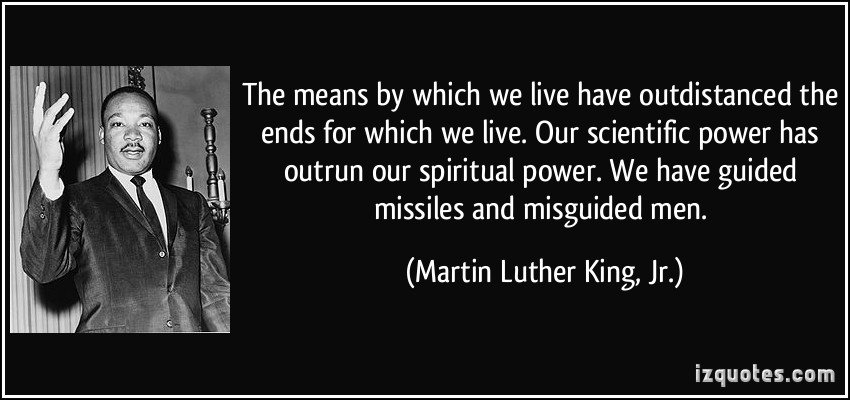
Finally an interesting quote to illustrate this notion:

quote-the-means-by-which-we-live-have-outdistanced-the-ends-for-which-we-live-our-scientific-power-has-martin-luther-king-jr-102519