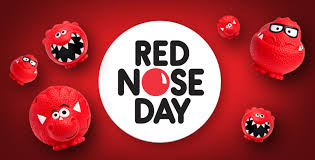
On Friday 13th March 2015 it’s Red Nose Day in the UK! But what exactly is Red Nose Day and why does it take place?
The first Red Nose Day (RND) was held on 5 February 1988, when it was launched as a National Day of Comedy, and since then they have been on the second or third Friday in March. Red Nose Day is often treated as a semi-holiday for example, many schools have red-themed non-uniform days. The day culminates in a live telethon event on BBC One, starting in the evening and going through into the early hours of the morning, but other money-raising events take place. As the name suggests, the day involves the wearing of red noses which are available, in exchange for a donation, from supermarkets and charity shops.
Here are a few articles and links about this fun day!
A reading comprehension on the British Council website
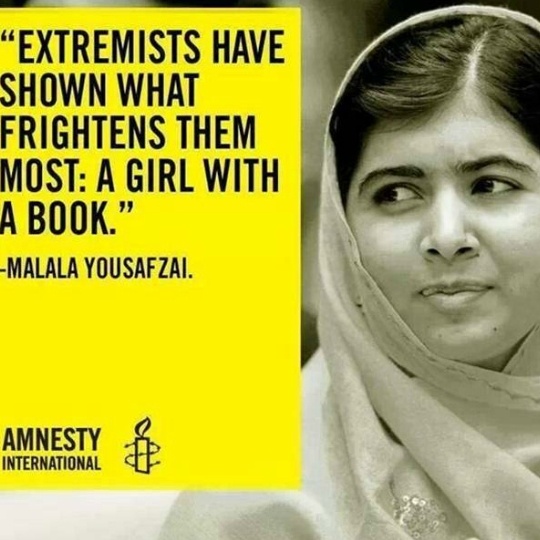
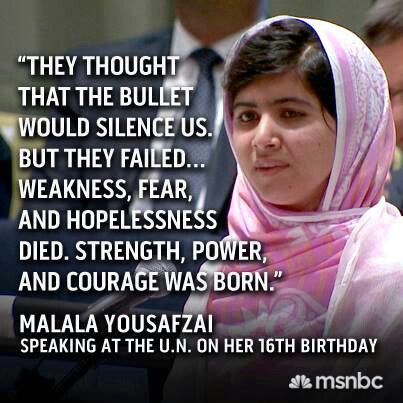
After the emotion of the events last week in France this is perhaps a good topic to discuss in class: Malala Yousafzai the Pakistani activist for female education and the youngest-ever Nobel Prize laureate.
Malala initially came to prominence when, as an 11-year-old, she wrote a diary for BBC Urdu, giving an account of how her school in Mingora town dealt with the Taliban’s 2009 edict to close girls’ schools. In October 2012 she was shot in the head by a Taliban gunman for « promoting secular education ». She recovered from the attack and was even more determined to continue her campaign which is now worldwide. In 2014 she became the youngest person ever to receive the Nobel Peace Prize. Her love for education, and her courage in standing up to the Taliban, made her an icon of bravery.
Here are a few articles and videos about Malala that can be used to illustrate several notions: myths and heros, places and forms of power and also the idea of progress.
One of the less-well known Christmas traditions in the UK is the countdown to the Christmas « number one »: which song will be number one in the charts for Christmas? It may seem surprising but the British take a great interest in the charts, more so than any other country in the world. This interest has been fuelled by the media – newspapers and magazines publish articles about the « contentenders » for the number one position and TV programmes such as X-Factor finish just before Christmas, giving the winner a good chance of taking the number one position.
Very often several charity records are released just before Christmas to raise money for different causes. For example this year marks the 100th anniversary of the Christmas Day Truce, during World War 1. This event inspired The Farm’s 1990 hit All Together Now and many of the UK’s biggest music stars have united as The Peace Collective, to re-record the song. The new track features a backing choir of schoolboy footballers from the Premier League and German Bundesliga. All profits from the release, will go to the British Red Cross and the Shorncliffe Trust.
Another charity song is the well-known hit « Do they know it’s Christmas? » a song that was initially written by Bob Geldof and Midge Ure in 1984 to raise money for relief of the famine in Ethiopia. The original version became the biggest selling single in UK Singles Chart history. The song was re-recorded in 1989 by Band Aid II and in 2004 by Band Aid 20, again raising funds for famine relief. The song was again re-recorded in 2014 by Band Aid 30, to raise funds for the ongoing Ebola crisis in West Africa.
Do they know it’s Christmas (2014)
Another contender for the number one spot is the song which accompanies the annual John Lewis advert (see also https://anglaispourlebac.com/2013/12/03/john-lewis-christmas-ad-another-christmas-tradition/)
This year it a story about Monty the penguin , and the song is « Real Love » by Tom Odell
Article in the Daily Telegraph about the annual John Lewis advert.
Notions that could be linked to this topic
Spaces and exchanges: young German and British footballers coming together to give a message of peace 100 years after the Christmas truce and raise money for charity
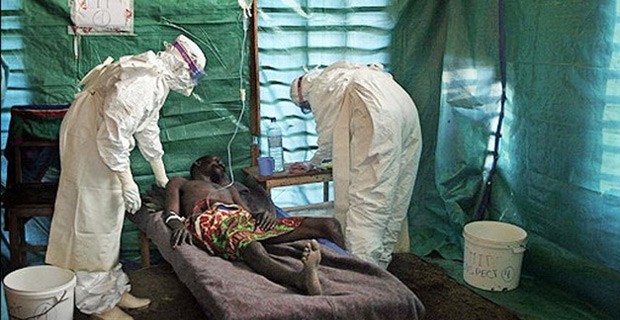
The Ebola outbreak is currently in the news and even more so now that several cases have been detected in the USA.
What exactly is Ebola? Is there a cure to this deadly disease? How can countries work together to reduce the risk of the disease spreading?
Ebola – or Ebola haemorrhagic fever (EHF) – is a really deadly virus: 50% to 90% of people who catch it die from it. But there are a few forms of the virus which have been identified by scientists and given the right medical care and treatment, you can recover. Ebola was first spotted in the African countries of Sudan and the Democratic Republic of the Congo in 1976. In the space of five months in that year, 284 people in Sudan caught the virus. It killed 117 of them.
You can catch it through direct contact with the body fluids of an infected person such as blood and saliva. It is not airborne like the flu so is more difficult to catch but is very infectious: so infected people have to be kept separate to reduce the risk of it spreading. Healthcare workers who have looked after sick patients have also been infected.
For the moment there is no known cure however a new experimental drug, ZMapp, has been used in the US on health workers and a UK nurse who caught the disease in Africa. They recovered from the virus.
The World Health Organization warns greater global efforts are needed to combat the Ebola virus, which is spreading ever faster in West Africa despite efforts to contain it. Barack Obama and EU leaders took part in a videoconference on Wednesday 15th October to discuss the growing Ebola crisis following warnings that the outbreak could grow to 10,000 new cases a week within two months. They discussed what further action can be taken to help stop the spread of the virus in west Africa and how passengers arriving from Africa can be screened to prevent the disease spreading further.
Here are a few videos that explain more about this outbreak.
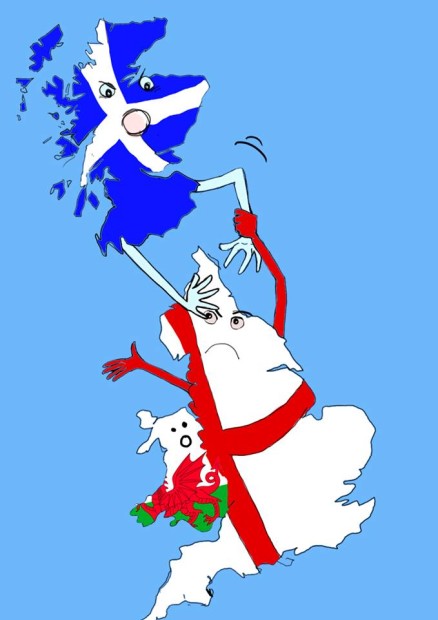
The Scottish independence referendum takes place on September 18th 2014. The voters will be asked one question: « Should Scotland be an independant country? »
The result of the referendum should be known on the 19th September. Today a poll (sondage) shows the « yes » side in the lead for the first time. Many people still haven’t made up their mind.
Here are a few articles to help you understand more about the Scottish independence referendum:
– a very clear BBC article which explains why the referendum is taking place, what are the arguments « for and against » and the key issues at stake
– a website for resources and views on the referendum
– a pdf to download with the background information
– a video with different opinions for and against :
– 9 reasons why Scotland is better off independant :
– the arguments against Scottish independence :
– Oral comprehension (type BAC)
– What is at stake? (BBC videos)
Do you think that Scotland should become independant?
Do you need ideas for the notion of myths and heroes?
What makes someone a hero? Is a hero someone who does a heroic act or is it simply someone doing his or her job?
Take a look at this website for some inspiration.
Here you will find a list of suggested heroes from Martin Luther King to Usain Bolt.
There is also a page which talks about what is a hero and another page where you will find descriptions of some the heroes mentioned with their life stories, their achievements, their characteristics and some quotations.
What is a hero? Different students give their opinion:
An inspirational video « There’s a hero in you » – This video features the following heroes:
John F. Kennedy
Martin Luther King, Jr.
John Lennon
Princess Diana (Lady Diana, Princess of Wales)
Mahatma Gandhi
Malala Yousafzai
Nick Vujicic
Jacques-Yves Cousteau
Jane Goodall
Francine Wheeler
A myth is a story that may or may not be true. There may not be records or other proof that they happened, but at least some parts of myths may be true. Some myths may have started as ‘true’ stories but as people re-told them some parts may have been changed by mistake, or to make them more interesting. All cultures have myths and this mythology has been developed over time. Mythology includes the legends of our history, our religions, stories of how the world was created, and our heroes. These stories have great symbolic power, and this may be a major reason why they survive as long as they do, sometimes for thousands of years.
What is a hero?
A hero is a person who is admired for their courage, outstanding achievements, or noble qualities. It can be the main character in a book or a film or a person with superhuman qualities. It can also be a modern-day hero, a person who has performed a heroic act or simply our own personal hero, our role model, who we look up to.
Examples can be:
– a patriotic or national hero (sportsman, politician, human rights defender…..)
When we define the « idea of progress » we usually say that progress is positive: medical progress, social progress, technological progress …all have contributed to our modern-day world being a better place. But how does this technological progress change our lives, is it really a positive change or are we becoming too dependent on new technologies?
One of the latest inventions is Google Glass, a pair of glasses which do much more than the average smartphone or computer. Is this kind of technological progress positive or will it lead to people becoming more isolated and more stressed?
Here are a few links to help you think about it:
An article about the pros and cons of Google Glass
A BBC News report about the advantages and disadvantages of the Google Glass






 Anglais pour le BAC