The Butler – the film that made Barack Obama cry

LEE DANIELS’ THE BUTLER tells the story of a White House butler, Eugene Allen who served eight American presidents over three decades. The film traces the dramatic changes that swept American society during this time, from the civil rights movement to Vietnam and beyond, and how those changes affected this man’s life and family. Eugene grew up during the time of Southern segregation and Jim Crow laws but he went on to find work as a waiter and went on to serve in the White House, working for for eight different US presidents.

Forest Whitaker stars as the butler with Robin Williams as Dwight Eisenhower, John Cusack as Richard Nixon, Alan Rickman as Ronald Reagan, James Marsden as John F. Kennedy.

The film is currently topping the American box office and is already being spoken of as a multiple Academy Award contender.

In a recent radio interview Obama admitted: « I teared up just thinking about not just the butlers who have worked here in the White House, but an entire generation of people who were talented and skilled, but because of Jim Crow, because of discrimination, there was only so far they could go. »

« And yet, with dignity and tenacity, they got up and worked every single day, » said Obama, the first African-American US president, noting that those who were discriminated against put up with a lot « because they hoped for something better for their kids ».

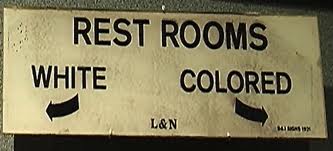
From the 1880s into the 1960s, a majority of American states enforced segregation through « Jim Crow » laws . Many states could impose legal punishments on people for consorting with members of another race. The most common types of laws forbade intermarriage and ordered business owners and public institutions to keep their black and white clientele separated.
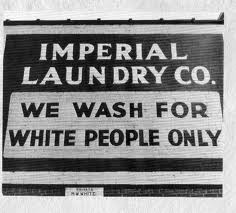
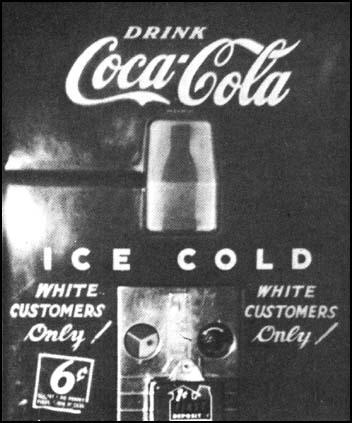
Jim Crow Law   USAjimcrow1   Jim Crow law

The film is released in France on the 11th September 2013, the title in French is « Le Majordome »

Here is the trailer for the film : link
Have fun learning history!

worldhistory1


Have you always found history boring? Do you find it difficult to learn your dates?

1. Here’s a fun way to learn about historical events on Historyteachers channel on You Tube :  http://www.youtube.com/user/historyteachers?feature=watch

You’ll never forget your dates again!

You can learn about

Henry VIII

William the Conqueror

Mary Queen of Scots

2. Another excellent video is Bad Romance: Women’s Suffrage – a parody music video paying homage to Alice Paul and the generations of brave women who joined together in the fight to pass the 19th Amendment, giving women the right to vote in 1920. (Could be used to illustrate the notion Myths and Heroes)

3. An excellent BBC video telling the story of Guy Fawkes and the Gunpowder Plot (I wish this kind of programme had existed when I was learning history!)

Bac 2013: confusion à l’épreuve d’anglais ?

Selon un journaliste anglais, les concepteurs du sujet d’anglais LV1 se seraient risqués à comparer le prestigieux ‘ »Oxford Union » avec une vulgaire association étudiante…
En savoir plus sur http://www.lexpress.fr/education/bac-2013-shocking-confusion-a-l-epreuve-d-anglais_1259312.html#f6YfvGVzIA8OFYGj.99

et aussi ici:

http://enseignementsup.blog.lemonde.fr/2013/06/22/confusion-ou-formulation-volontaire-le-sujet-dexpression-ecrite-du-bac-danglais-fait-polemique/

Qu’est ce que c’est « Oxford Union »?

Read about it here: http://www.oxford-union.org/about_us

Food in Britain

premier-foods_1011410c

How much is today’s British cuisine influenced by its multicultural population?

We have all heard about the traditional British dishes such as fish and chips, roast beef and yorkshire pudding, roast lamb and mint sauce, bacon and eggs, but British cuisine is changing. If you walk round London you will be amazed by the amount of foreign restaurants – thai, japanese, italian, chinese, indian…

Thank to globalisation traditional British cuisine is being reinvented and new dishes are appearing on menus.

Watch this video to find out more about it: Video

There are also exercises that you can download or try online.

Idea for « Spaces and exchanges »

This topic could be used to illustrate the notion of spaces and exchanges. Think about how the way we eat today is influenced by globalization – what are the advantages and disadvantages of this?

On a positive side, food is more interesting, more colourful, tastier, more inventive than before, we take an interest in other cultures and there are more and more foreign products are available in supermarkets.

However globalization may be responsible for today’s bad eating habits – the boom of fast food and problems of obesity. It can also cause a problem for the environment due to the fact that more and more products are imported and flown across the world. A demand is created for products that we don’t necessarily need!

nutrition_cartoons

All you ever wanted to know about life in the United Kingdom!

UKlifeteachingresources

Here are a few links to find out more about life in the UK

1. Vous trouverez sur ce site la réponse à 100 des questions les plus courantes et les plus intéressantes que l’on se pose à propos du Royaume-Uni (en français)

http://100questions.net/wp/

2. If you want to find out information about life in the UK you can visit this site (in English):

http://www.projectbritain.com/

3. You can listen to this recording from the British Council website:

http://learnenglish.britishcouncil.org/en/i-wanna-talk-about/my-life-uk

4. Visit the « Visit Britain » website to get information about the cities and places to visit:

http://www.visitbritain.com/en/About-Britain/

If you click on the town names you can watch videos

Definition of places and forms of power

150065_558888104124335_95901079_n

How can you define the notion of places and forms of power?

« Places » could be important buildings or institutions that represent a certain form of power, for example Buckingham Palace – a symbol of the British monarchy, the White – a symbol of the American presidency. A place can also be a country or a state –  for example the USA is a state which is powerful enough to influence events throughout the world (superpower) and China is a major economic power in today’s world.

« Power » is the ability to control others, events, or resources; the ability to make things happen despite obstacles, resistance, or opposition. This of course leads to conflict between those who have power and those who don’t.

You can use this « prezi » (interactive presentation) to find ideas to illustrate the notion of « places and forms of power »

http://prezi.com/pkzwjibb5fb_/places-and-forms-of-power/

You will find a definition of the four notions here

Definition of spaces and exchanges

An exchange is the act of  giving or receiving something in substitution for something else. In today’s modern-day world these exchanges can take several forms:  economic – work exchanges, exchange of goods, trading across borders,  cultural – exchange of ideas, information, education,  movement of people – immigration, student exchanges, gap years…  Our modern-day world is changing quickly and seems to be a smaller place due to improvements in technology and communication. Information exchange has become easier thanks to the internet and international trade has enabled us to expand our markets for goods and services that might not have been available to us.  These different cultural, economic, sociological and language interactions have transformed and characterised our modern-day world – sometimes for better, sometimes for worse.  We can illustrate this notion with the following examples :

Exchange or movement of money:

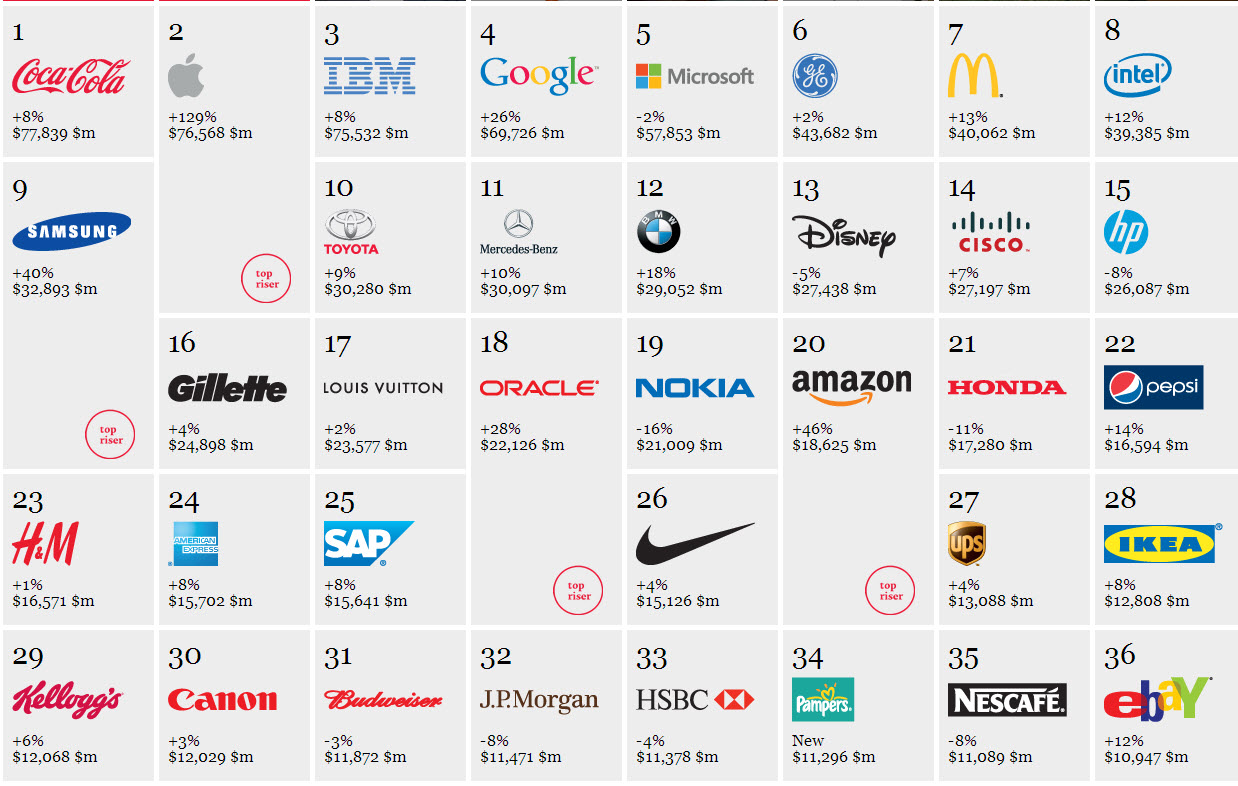
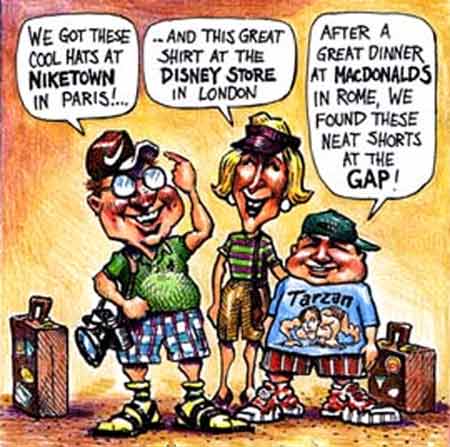
– international trade is now much easier thanks to modern communication systems and faster transport. Foreign products are easily available in our supermarkets and on internet. Certain brands are known all over the world. We live in a huge global economy – this is otherwise known as globalisation.     – Watch the video to find out more . What are the advantages and disadvantages of  globalisation? – Watch this ad on youtube: 

http://youtu.be/t6gwfMBkWQU  – What do you see? What are the disadvantages of globalisation? – Link to the BBC website : what is globalisation?  and a BBC video about globalisation – Don’t forget to mention the downsides of globalisation: for example child labour, exploitation of people and resources interbrand

Exchange of information and communication

– One of the major developments in the most recent years is the internet and the different social networks: Facebook, Twitter, Skype…they are changing the way we live and communicate today. These networks make it easier for us to stay in touch with friends and family abroad, they open up borders and enable us to communicate with people abroad. However there are also disadvantages to this fast development of internet: there is a lot of false information available, people can become addicted and spend less time with friends and family, there are other dangers such as bullying , pornography, identity theft….. – School and education  – there is more and more social diversity and more knowledge than in the past. Thanks to internet information travels faster than before (but this can sometimes be negative especially when the information is false). We can compare the different educational systems across the world.

Movement of people

– Immigration: how and why it began? Why did people emigrate to the USA, what is the American Dream ….. The impact of  Mexican-US migration: http://www.youtube.com/watch?v=T5sF1I_lBbQ http://www.youtube.com/watch?v=5KvG8BwhSUs – Cultural interactions: the movement of people across borders  – Gap year, student exchange programs…. What is a gap year? http://www.youtube.com/watch?v=ajTtOKuEnZg – What impact has the movement of people had on the different countries? Who benefits from these exchanges? What are the new emerging powers?   For more information here is another « prezi » to help you find some ideas to illustrate the notion of spaces and exchanges http://prezi.com/l-0odniubs6n/spaces-exchanges/

World_Vission_Cartoon     globalisation