A short video that perfectly illustrates the idea of progress !
(no language just pictures)

A short video that perfectly illustrates the idea of progress !
(no language just pictures)

ST. PATRICK
Saint Patrick, who lived during the fifth century, is the patron saint and national apostle of Ireland. Born in Roman Britain, he was kidnapped and brought to Ireland as a slave at the age of 16. He later escaped, but returned to Ireland and was credited with bringing Christianity to its people. In the centuries following Patrick’s death (believed to have been on March 17, 461), the mythology surrounding his life became ever more ingrained in the Irish culture: Perhaps the most well known legend is that he explained the Holy Trinity (Father, Son and Holy Spirit) using the three leaves of a native Irish clover, the shamrock.
THE FIRST ST PATRICK’S DAY PARADE
Since around the ninth or 10th century, people in Ireland have been observing the Roman Catholic feast day of St. Patrick on March 17. Interestingly, however, the first parade held to honor St. Patrick’s Day took place not in Ireland but in the United States. On March 17, 1762, Irish soldiers serving in the English military marched through New York City. Along with their music, the parade helped the soldiers reconnect with their Irish roots, as well as with fellow Irishmen serving in the English army.
THE CHICAGO RIVER ON ST. PATRICK’S DAY

As Irish immigrants spread out over the United States, other cities developed their own traditions. One of these is Chicago’s annual dyeing of the Chicago River green. The practice started in 1962, when city pollution-control workers used dyes to trace illegal sewage discharges and realized that the green dye might provide a unique way to celebrate the holiday. That year, they released 100 pounds of green vegetable dye into the river–enough to keep it green for a week! Today, in order to minimize environmental damage, only 40 pounds of dye are used, and the river turns green for only several hours.
ST. PATRICK’S DAY AROUND THE WORLD
Today, people of all backgrounds celebrate St. Patrick’s Day, especially throughout the United States, Canada and Australia. Although North America is home to the largest productions, St. Patrick’s Day is celebrated in many other locations far from Ireland, including Japan, Singapore and Russia.
In modern-day Ireland, St. Patrick’s Day was traditionally been a religious occasion. In fact, up until the 1970s, Irish laws mandated that pubs be closed on March 17. Beginning in 1995, however, the Irish government began a national campaign to use interest in St. Patrick’s Day to drive tourism and showcase Ireland and Irish culture to the rest of the world. Today, approximately 1 million people annually take part in Ireland ‘s St. Patrick’s Festival in Dublin, a multi-day celebration featuring parades, concerts, outdoor theater productions and fireworks shows.
(Source: http://www.history.com)
You can watch these videos to find out more information:
Use this link to find out about how St Patrick’s Day is celebrated:
Il est souvent difficile de trouver des idées pour illustrer chaque notion. N’oubliez pas que certains sujets peuvent être utilisés pour illustrer 2 ou même 3 notions – prenons comme exemple l’histoire de Rosa Parks:
– (myths et héros) une figure emblematique de la lutte contre la ségrégation raciale aux États-Unis
http://www.sparknotes.com/history/american/civilrights/terms.html
– (lieux et formes de pouvoir) les raisons de la lutte contre la ségrégation raciale aux Etats Unis
– (idée du progrès) – comparaison des conditions de vie des afro-américains pendant les années 60 avec les conditions aujourd’hui (un président noir).
Voici donc quelques idées de sujets pour illustrer la notion « Lieux et formes de pouvoir ».
« Places » could be important buildings or institutions that represent a certain form of power, for example Buckingham Palace – a symbol of the British monarchy, the White – a symbol of the American presidency.
A place can also be a country or a state – for example the USA is a state which is powerful enough to influence events throughout the world (superpower) and China is a major economic power in today’s world.
It is the ability to control others, events, or resources; the ability to make things happen despite obstacles, resistance, or opposition. This of course leads to conflict between those who have power and those who don’t.
There are many examples of resistance to power:
– the African-American civil rights movement (Rosa Parks, Martin Luther King Junior, Malcom X….)
Videos to watch:
– Biography of Rosa Parks
– Song « Sister Rosa » about Rosa Parks
– Presentation of the characters from the book and film « The Help » (la Couleur des Sentiments):
– trailer from the film « The Butler »
– interesting page with lots of links about the film « The Butler »
– the struggle for liberation in South Africa (Apartheid, Nelson Mandela)
– the Suffragettes’ fight for women’s right to vote
Video « Bad romance » : a parody music video paying homage to Alice Paul and the generations of brave women who joined together in the fight to pass the 19th Amendment, giving women the right to vote in 1920.
–Women’s rights movement in the US
If we look at the power of the media for example we can see how much it can influence the public opinion. The mass media plays an important role in forming our personality, enriching our knowledge, providing us with information of any kind.
Mass media can have an effect on our personal identity: it can help us to feel that we are part of a group (social networks) but on the other hand it can contribute to a feeling of isolation.
Media can have a strong political influence or can shape the way we perceive certain groups of society – minority groups, pressure groups…mass media is powerful because it makes us believe what is acceptable and unacceptable behaviour (reality TV).
However it can also have harmful impact on society:
– On-screen violence leading to actual violence (violent video games/films)
– Identity or financial fraud on the internet people to fraud, especially identity fraud.
– the dangers for children who are able to access Internet material inappropriate for their age.
– The Internet can facilitate an invasion of privacy – (chat rooms, social networks, bullying)
– The European Union – past, present and future
– the « superpowers » ( states with a dominant position in the international system with the ability to influence events and its own interests and project power on a worldwide scale to protect those interests – e.g. USA)
– emerging countries (Brazil, Russia, India and China, are now playing an increasingly important role in the global economy, with this group of four powerful developing economies sometimes referred to as the BRIC countries)
– The debate on gun control in the USA
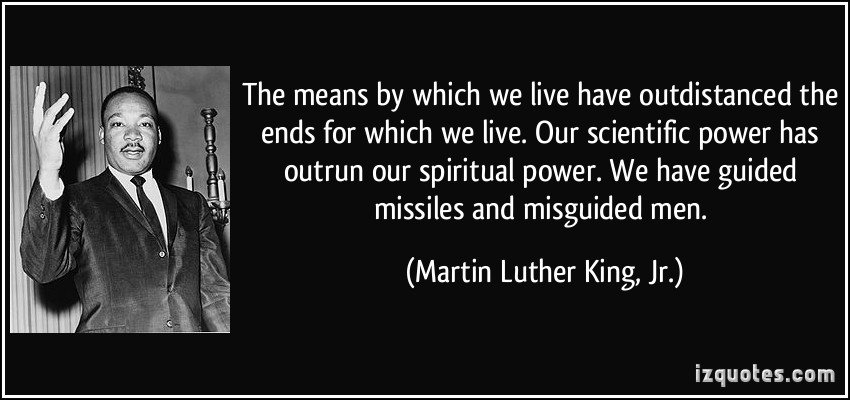
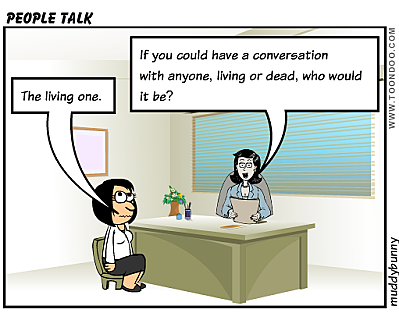
Finally an interesting quote to illustrate this notion:
Pour la deuxième partie de votre épreuve d’expression orale l’examinateur vous posera des questions en lien avec la notion que vous avez choisie.
It is impossible to know exactly what questions you could be asked but you can think about the sort of questions that could be asked and prepare your answers beforehand. If you are more at ease with a notion, try to mention it in your conclusion!
Here are just a few ideas :
Who do you consider to be your hero? Why?
Is it a sportsperson, an actor, an artist, a pop star, a member of your family, an ordinary hero such as a fireman? Why is this person considered a role model?
What are his/her qualities?
Why are myths and heroes important to our society?
Do you think that myths and heroes can teach us a lesson?
Can you think of an anti-hero? Can you talk about their behaviour?
What myth does your document remind you of?
How do people exercise their power? What tools can they use?
What in your opinion is the most dangerous form of power?
Can you give an example of a power struggle?
What are the limits to power? How is power abused?
Why do people need to exercise their power on others?
How do people exercise their power on others? (revolution, riots, demonstrations, disobedience)
In what way has progress made life better? Can you give examples?
Do you think that progress is always positive? Can there be a negative side to progress?
What do you think are the most important inventions of the past 50 years?
How has internet changed today’s world?
What are the advantages and disadvantages of progress? Illustrate your ideas/give examples.
Would you like to be able to travel in time? Would you prefer to move forward to the future or travel back in time?
Would you like to travel abroad? Which country would you like to live in? Why?
Have you ever travelled abroad? Which countries have you visited?
What did you learn from your trips abroad?
What kind of exchanges are there in today’s world? (trade, financial, sport, social networking, education…..)
What impact does globalisation have on exchanges?
How are these exchanges influenced by modern technologies? Do the new technologies make exchanges easier?
What do we gain from these exchanges? What do people to immigrate to another country bring to the new country? (examples)
Who benefits the most from these exchanges?
What is the American Dream? Is it still true today?
Vous trouverez quelques fiches de conseils pour l’épreuve sur ce site: http://lemaire.english.free.fr/lepreuvedexpress/index.html
– Sur le site d’Annabac vous trouverez toutes les informations sur l’épreuve d’anglais au BAC
– Sur le site de l’Académie de la Martinique vous trouverez un « kit de survie » pour l’épreuve écrite
– Des conseils sur toutes les parties de l’épreuve sur le site de l’atelier d’anglais du Lycée Margueritte
– You will find lots of interesting ideas and links for all the different notions on this blog: Food for thought from Bucharest
Si vous en connaissez d’autres n’hésitez pas à les proposer en commentant cet article!!
Qu’évalue-t-elle ?
La capacité de l’élève à exposer un point de vue pertinent durant la première partie de l’épreuve et à prendre part à une conversation durant la deuxième partie.
La première partie
La deuxième partie
« Cette prise de parole en continu sert d’amorce à une conversation conduite par le professeur, qui prend appui sur l’exposé du candidat. Cette phase d’interaction n’excède pas 5 minutes. Pour chaque candidat, le professeur conduit son évaluation à partir de la fiche d’évaluation et de notation correspondant à la langue (LV1 ou LV2) présentée. Cette fiche a le même statut qu’une copie d’examen. À l’issue de cette évaluation, le professeur formule une proposition de note et une appréciation. Cette proposition de note ainsi que l’appréciation ne sont pas communiquées au candidat. »
Au cours de cet échange, le professeur pourra par exemple demander au candidat de clarifier des points restés obscurs dans l’exposé, de préciser certains aspects, d’illustrer son propos par des exemples…
L’évaluation de la prestation du candidat
Le jour de l’épreuve, le candidat sera mis en confiance. Sa capacité à parler de la notion sera valorisée quand bien même il ferait des erreurs.
 « Toutes les épreuves doivent être conduites dans un esprit positif, en mettant le candidat en situation de confiance et en évitant de le déstabiliser.
Pour chaque épreuve, l’examinateur établit son évaluation à partir de celle des fiches d’évaluation présentées en annexe qui correspond à la langue (LV1, LV2, LV3), à la nature et au statut de l’épreuve (épreuve orale obligatoire, enseignement de spécialité, enseignement obligatoire de littérature étrangère en langue étrangère, enseignement facultatif).
Dans tous les moments d’expression orale en langue étrangère, il est attendu du candidat qu’il s’exprime clairement dans une gamme de langue suffisamment étendue pour pouvoir décrire, donner brièvement des justifications ou des explications et développer une argumentation. On valorisera la capacité à varier la formulation. Le candidat devra pouvoir communiquer avec une aisance raisonnable dans une langue simple. Il devra s’exprimer dans une langue grammaticalement acceptable en fonction du niveau d’exigence de l’épreuve et avoir acquis une prononciation claire et une intonation pertinente.
Pendant la phase de prise de parole en continu, l’examinateur doit laisser le candidat aller au bout de ce qu’il souhaite dire, même si sa présentation comporte quelques hésitations, voire de brefs silences. »
Pour en savoir plus sur les épreuves de LV au BAC Session 2014 :
http://pedagogie.ac-toulouse.fr/langues-vivantes/spip.php?article1298
FICHES EVALUATION baccalauréats général et technologique (hors séries L, TMD, STAV et hôtellerie)
FICHES EVALUATION des épreuves du BAC oral de la série L
DOSSIER Questions-Réponses publié sur EDUSCOL janvier 2014
Le moment de l’évaluation :
Il sera choisi par l’établissement au cours du 3ème trimestre dans le cadre d’une réflexion partagée.
L’épreuve d’expression orale sera annoncée suffisamment à l’avance aux élèves. Son organisation en termes de locaux, de personnel et de mise en cohérence avec les emplois du temps des élèves et de leurs professeurs devra être anticipée.
L’interrogateur :
Il pourra s’agir de l’enseignant de l’élève ou non, en fonction de qui aura été décidé au niveau de l’établissement.
« S’agissant d’une évaluation encours d’année qui se situe pendant le temps scolaire, il est logique qu’elle soit conduite par le professeur de la classe. On ne peut pas exclure cependant, que dans le cadre d’un travail d’équipe au sein de l’établissement, elle soit conduite par des professeurs d’autres classes du même établissement sous forme d’échange de service. » FAQ sur Eduscol :
http://media.eduscol.education.fr/f…
La note :
« Les notes attribuées dans le cadre de cette évaluation en cours d’année ne sont pas communiquées aux élèves. Elles sont définitivement arrêtées par le jury du baccalauréat. »
Source: Portail Langues, Academie de Versailles
Les examens blancs approchent!
Préparez-vous avec les sujets de bac de 2013 que vous trouverez ici: franglish.fr

Elizabeth II
Queen Elizabeth II was born on 21 April 1926. Today she is Queen of sixteen countries throughout the world: the United Kingdom, Canada, Australia, New Zealand, Jamaica, Barbados, the Bahamas, Grenada, Papua New Guinea, the Solomon Islands, Tuvalu, Saint Lucia, Saint Vincent and the Grenadines, Antigua and Barbuda, Belize, and Saint Kitts and Nevis. She is the queen of each country separately, and all sixteen are independent countries. She became Queen when her father, King George VI, died on 6 February 1952.
The countries of which she is Queen are known as Commonwealth realms. Their total population is over 129 million. Elizabeth II lives in the United Kingdom. In all the other countries where she is queen, a person has been chosen to represent her. This person is known as the Governor General.
Elizabeth II is Queen and is interested in the running of her countries, but she does not tell the governments what to do. She has regular meetings with people from her governments, but it is they who run the countries. She performs ceremonies for the governments, gives out honours, and visits and supports many charities.
Since 1947, the Queen has been married to Prince Philip, Duke of Edinburgh. Prince Philip was born into the royal families of Greece and Denmark. Just before they were married, he became a citizen of the United Kingdom, and changed his name to Philip Mountbatten. He became the Duke of Edinburgh on the day he married, and became a Prince of the United Kingdom in 1957. The Queen and Prince Philip have four children, eight grandchildren and three great-grandchildren.
Source: Simple English Wikipedia
Here are a few links to learn more about Queen Elizabeth:
An exclusive interview with the Queen: video
10 things you didn’t know about the Queen: video
I can tell you are all going back to school tomorrow!! A record number of visits this afternoon!! Just like my kids, you leave your homework till the last minute!!
Thanks for visiting my blog, I hope that it helps you to prepare your BAC. If you have any questions please ask me, I’ll try to answer.
There will be some help for your oral exam coming soon – watch this space!! Good luck!!
Kate
🙂
ps vous pouvez aussi poser des questions en français!! 😉

ANC involvement
Mandela was educated at the University of Fort Hare and later at the University of Witwatersrand, he qualified in law in 1942. He became increasingly involved with the African National Congress (ANC), a multi-racial nationalist movement trying to bring about political change in South Africa.
In 1948, the National Party came to power and began to implement a policy of ‘apartheid’, or forced segregation on the basis of race. The ANC carried out a campaign of passive resistance against apartheid laws.
In 1952, Mandela became one of the ANC’s deputy presidents. By the late 1950s, faced with increasing government discrimination, Mandela, his friend Oliver Tambo and others began to move the ANC in a more radical direction. In 1956, Mandela went on trial for treason. The court case lasted five years, and finally Mandela was acquitted.
In March 1960, 69 black anti-apartheid demonstrators were killed by police at Sharpeville. The government declared a state of emergency and banned the ANC. In response, the organisation abandoned its policy of non-violence and Mandela helped establish the ANC’s military wing ‘Umkhonto we Sizwe’ or ‘The Spear of the Nation’. He was appointed its commander-in-chief and travelled abroad to receive military training and to find support for the ANC. On his return he was arrested and sentenced to five years in prison. In 1963, Mandela and other ANC leaders were tried for plotting to overthrow the government by violence. The following year Mandela was sentenced to life imprisonment. He was held in Robben Island prison, off the coast of Cape Town, and later in Pollsmoor Prison on the mainland. During his years in prison he became an international symbol of resistance to apartheid.
In 1990, the South African government responded to internal and international pressure and released Mandela, at the same time lifting the ban against the ANC. In 1991 Mandela became the ANC’s leader.
He was awarded the Nobel Peace Prize together with FW de Klerk, then president of South Africa, in 1993. The following year South Africa held its first multi-racial election and Mandela was elected its first black president.
In 1998, he was married for the third time to Graça Machel, the widow of the president of Mozambique. Mandela’s second wife, Winnie, whom he married in 1958 and divorced in 1996, remains a controversial anti-apartheid activist.
In 1997 he stepped down as ANC leader and in 1999 his presidency of South Africa came to an end.
In 2004, Mandela announced his retirement from public life, although his charitable work continued. On 29 August 2007, a permanent statue to him was unveiled in Parliament Square, London.
He died on 5 December 2013, aged 95.
– Watch the video on the BBC Website: Obituary
– Watch the video on the Guardian newspaper website: http://www.telegraph.co.uk/news/worldnews/nelson-mandela/8286419/Nelson-Mandela-obituary-part-one-one-of-the-most-inspiring-figures-of-the-20th-century.html
– Learn about the timeline of Mandela’s life with videos : BBC News
– Learn some of Mandela’s popular quotes
– Watch the video on the History channel
– How would Mandela have used social media if it has existed? Watch the Video here – thank you to http://www.teachermanigat.com/ for the link!
– You can visit the excellent Apartheid museum website
– Online exercises here
– Learn all about Mandela and apartheid here
Do you consider Nelson Mandela to be a modern-day hero? What has he achieved for black South Africans? How has their life become better today? Does this make him a hero?This topic can not only illustrate the notion of myths and heroes but also the idea of progress: after racial segregation during colonial times in South Africa, the struggle that led to the abolition of apartheid has brought about a great number of changes for the black population.Finally this topic could be the perfect illustration for the notion of places and forms of power:
Apartheid caused significant internal resistance and violence, and a long arms and trade embargo against South Africa. There were many uprisings and protests leading to the imprisoning of anti-apartheid leaders. As unrest spread and became more effective and militarised, state organisations responded with repression and violence. Along with the sanctions placed on South Africa by the international community, this made it increasingly difficult for the government to maintain the regime. Apartheid reforms in the 1980s failed to stop the mounting opposition, and in 1990 President de Klerk began negotiations to end apartheid. There were multi-racial democratic elections in 1994 that were won by the African National Congress under Nelson Mandela.
 Anglais pour le BAC